
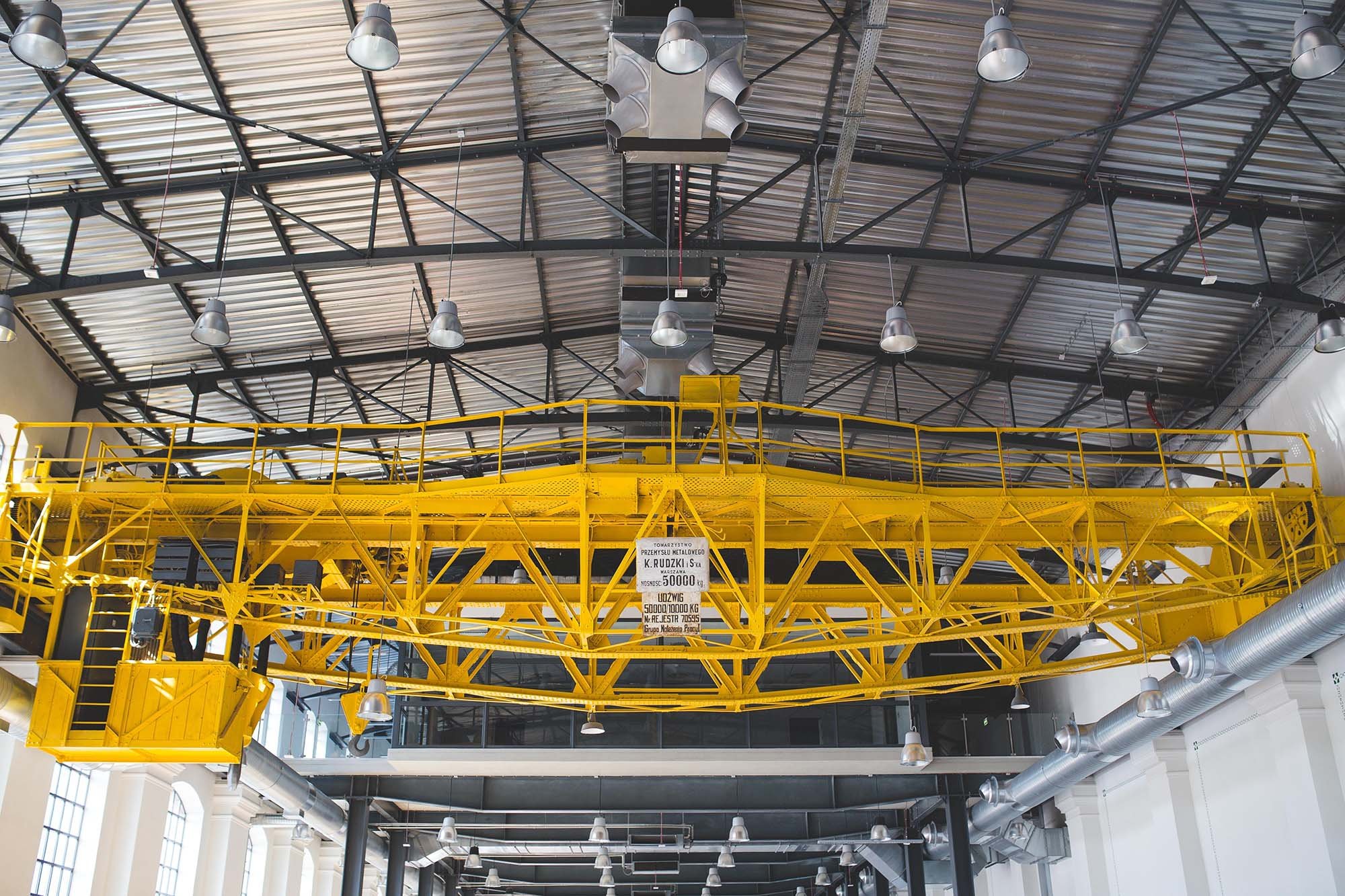
Aisem: "There's a risk of production shutdowns for some companies. It's necessary to ensure more adequate time and effective training support tools."
Starting May 19, overhead crane operators in Italy, a professional category employing over half a million people, will also be required to be trained in accordance with the 2025 State-Regions Agreement (ASR 2025). Without this training, required by specific regulations, it will be impossible to practice the profession. Incidentally, the Ministry of Labor lists the May 19 date on its website, although based on the publication date of the ASR 2025 in the Official Journal, compliance effectively begins on May 25. This discrepancy in dates is creating uncertainty among operators regarding safety, an issue on which uncertain interpretations should not exist.
Before the introduction of the new Agreement, training on the use of equipment such as overhead cranes was already required by the Consolidated Law on Occupational Safety (Legislative Decree no. 81/2008), but the choice of training program remained at the discretion of the employer . With the new Agreement, however, overhead cranes have been included in the list of work equipment for which specific, standardized, and predefined training is mandatory—both in content and in terms of hours—as is already the case, for example, for forklifts.
However, significant critical issues have emerged in the practical implementation of ASR 2025. The timeframe allowed for compliance has proven too short given the vast number of companies involved. According to estimates by AISEM , the Italian Association of Lifting, Elevation, and Handling Systems affiliated with Anima Confindustria, over 150,000 overhead cranes are currently in operation in Italy, each operated and managed by different operators within the company.
This creates a difficult-to-manage paradox: by law, all overhead cranes used by operators without adequate training, i.e., in line with the provisions of the ASR 2025, must be stopped, with serious operational repercussions for many companies.
AISEM President Massimiliano Bariola comments: "The introduction of mandatory licensing for overhead crane operators raises regulatory and institutional controversies. The distinction between the previously required training and the current mandatory requirement, with standards set by interinstitutional agreements, creates uncertainty and difficulties of interpretation for businesses. It should also be considered that some companies may not yet be aware of this new requirement, given the short timeframe between the announcement of the requirement and the entry into force of the regulation. Given the large number of operators involved ," Bariola continues, " AISEM had asked the institutions for at least five years to complete the training courses, but this request was not granted. It is therefore necessary for the competent authorities to collaborate to ensure more adequate time and effective training support tools, in order to reconcile safety and production continuity."
Matteo Frigo , lifting group leader within Aisem, emphasizes: "The operational difficulties in implementing mandatory training are evident and shared by the operators themselves. There is also a real risk of short-lived or poorly structured training courses being organized, which do not follow the correct required training path . We remind you that Aisem and its member companies are accredited training organizations , in full compliance with the provisions of the State-Regions agreement. At this time, open dialogue between regulatory bodies, companies, and trade associations is needed to prevent a measure designed to protect safety from becoming an obstacle to regular work activities. Aisem will continue to carefully monitor the evolution of the situation, confirming its commitment to complying with safety regulations and industrial development needs."
AISEM is the Anima federated association that brings together the best national businesses for the construction and distribution of material handling, lifting, and hoisting machinery. It represents over 80% of the entire national production, approximately 40% of which is exported.
ANIMA Confindustria is the trade organization within Confindustria that represents companies in the mechanical and related sectors, a sector that employs 224,000 people, generates a turnover of €59.1 billion, and will account for approximately 60% of exports in 2025 (Anima Research Office 2025 forecasts). The macro-sectors represented by ANIMA are: construction and infrastructure; material handling and logistics; food production; energy production; industrial production; and safety and environment.
Ucimu: orders index for the second quarter of 2026 still down (-25.8%); foreign orders (-15.3%); dom
Riccardo Rosa, president of UCIMU: "We'll have to wait until the next few months to see the full effects of the hyper-depreciation, but we're very confident this measure will last until September 2028." In the second quarter of 2026, the machine tool orders index compiled by the UCIMU-SISTEMI PER PRODURRE Study & Business Culture Centre recorded a decline of -25.8% compared to the April-June 2025 period . In absolute value, the index stood at 47.8 (base 100 in 2021). The result expresses the difficulties that Italian machine tool manufacturers have encountered both on the domestic and foreign markets. In particular, orders collected from abroad decreased by -15.3% compared to the second quarter of 2025, for an absolute value of 63.2. Order intake in Italy also declined , falling 38.7% compared to the same period of the previous year. The absolute value of the index stood at 33.1. Riccardo Rosa, president of UCIMU-SISTEMI PER PRODURRE, stated: “The uncertainty of the geopolitical context—shaken by wars, the Hormuz crisis, and the decidedly worrying attitude of the President of the United States toward international politics—has profoundly undermined the already precarious balance in which the industry found itself operating.” "The decline in international deliveries, given the current situation, is understandable, and we expected it. Business has slowed, but, as is our custom, we've tried to focus our offerings on those areas less directly affected by conflicts and critical issues, diversifying our product offerings wherever possible." "It is certain ," continued President Riccardo Rosa , " that the investment figures and values once ensured by the automotive industry cannot be replaced by the demand expressed by other sectors, however dynamic, such as defense, aerospace, and energy. For this reason, once again, we ask our representatives in Europe to reconsider their decision and adopt the principle of technological neutrality when defining automotive development plans. This approach would allow the industry, and its entire supply chain, to properly manage the ongoing transition, not only respecting the environment but also safeguarding, where possible, employment." Domestically, businesses awaited clarifications on the hyper-depreciation program to confirm their purchasing intentions. Since June 12th, the day all the operational steps were completed, the hyper-depreciation program has been bearing fruit. We immediately noticed a change in attitude among Italian users: orders are starting to arrive. "We'll have to wait a few more months, however, for the effect to be fully reflected in our data, but we're definitely confident. This is also because, in the meantime, we have data from the Ministry of Business and Made in Italy, which, as of July 9th, reported the submission of 7,000 communications on the GSE platform, worth €2.5 billion." MIMIT deserves great credit for having established a multi-year term for this incentive. Its effectiveness until September 2028 should ensure thoughtful planning of investments in new machine tools and production technologies by Italian customers, also allowing us manufacturers to plan our production activities over the medium term. "The hope ," concluded Riccardo Rosa , " is to soon see the Italian market return to the levels it experienced in 2021-2022, when it was worth over €6 billion. This is also because our manufacturing industry needs to innovate to remain competitive in an international context where digital and AI are completely reshaping the rules of the game."
 Industriale.it certification