AMB 2026: Collaborative Processes Drive Automation

Veröffentlichte die 09/07/2026
AMB 2026: Collaborative Processes Drive Automation

Central topic: Automation: Patrick Schwarzkopf (VDMA) discusses collaborative processes, artificial intelligence, and automation for SMEs using no-code solutions.

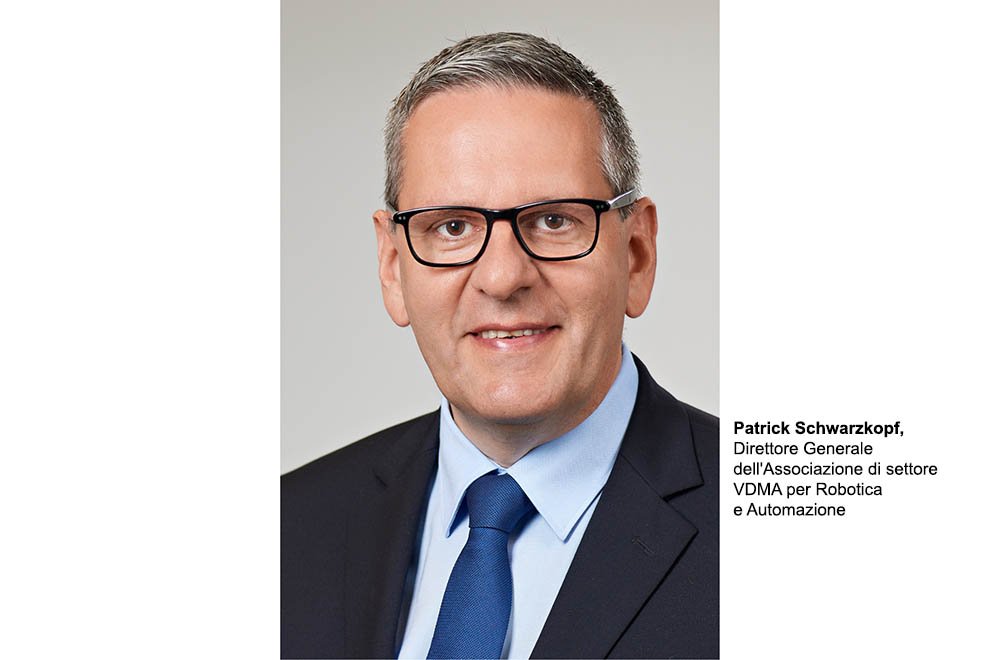
As manufacturing companies strive to make their processes more efficient and flexible, automation solutions play a key role, especially in areas where people and machines are increasingly collaborating. AMB 2026 addresses this key topic with a practical approach and demonstrates how collaborative processes are evolving across the entire metal cutting process chain. In this interview, Patrick Schwarzkopf, Director General of the VDMA Robotics and Automation Association, analyzes the key factors driving this evolution and provides an overview of the developments companies should keep an eye on.

Automation as one of the three central themes: Collaborative processes are gaining increasing importance

AMB : The robotics and automation industry is forecasting a 5% decline in revenue by 2026; nevertheless, pressure on manufacturing companies to automate their processes continues to grow. Why is now the right time to focus on collaborative processes, and what factors are driving companies to take this step?

Patrick Schwarzkopf : It's true, we're still observing a marked caution in investments, due to several reasons: from geopolitical tensions to the well-known challenges related to the competitiveness of production sites. However, the trend toward automation remains unchanged. Demographic change will become even more evident in the coming years; this will make it necessary to automate an increasing number of activities to support the remaining qualified personnel. Only in this way can we remain competitive. The interaction between humans and machines will be crucial. The extremely rapid development of artificial intelligence (AI), particularly generative AI and so-called physical AI, opens up new possibilities, for example through agent AI (Agentic AI) and through the much simpler use and programming of automation solutions.

AMB : For a long time, automation was primarily designed for large-scale production. Today, however, robotic solutions are a viable option even for small series. How far has this evolution come, and what does a small business actually need to introduce automation into its production process?

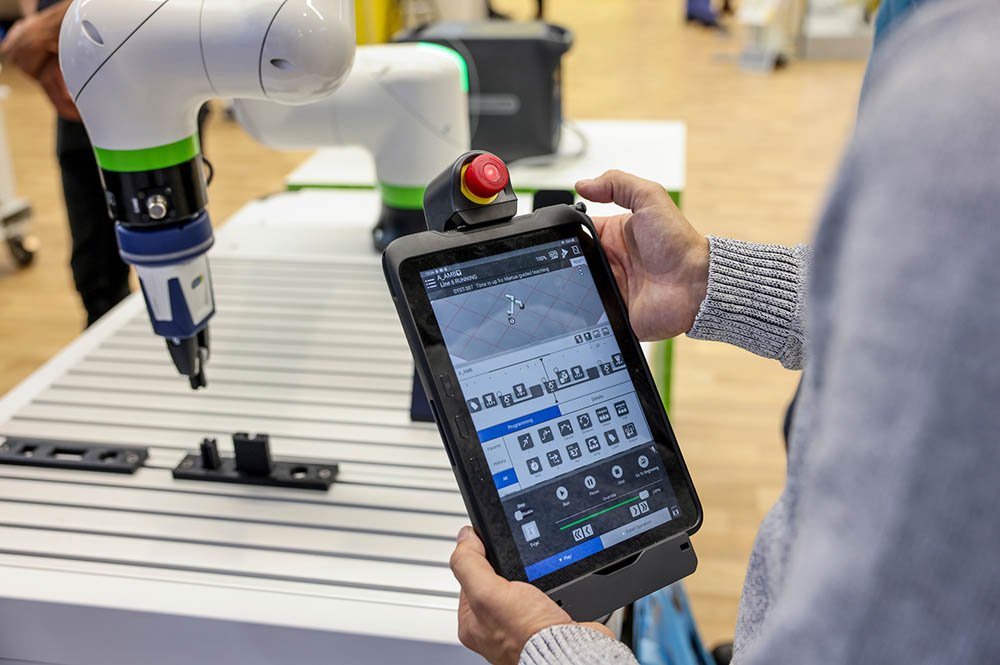
Patrick Schwarzkopf : Automation for SMEs is making enormous strides. Technological developments in recent years have been extraordinary and have significantly reduced the barriers to entry for small and medium-sized enterprises. Typical scenarios are "low volume, high mix," characterized by low production volumes and a high degree of product diversity. In these contexts, it is crucial that programming can be performed quickly, easily, and without significant staff effort. Numerous no-code solutions exist today for this purpose, requiring no programming knowledge. Automation workflows can be configured via graphical interfaces with drag-and-drop functionality, while robot trajectories can be taught through manual guidance (hand-guiding) and memorized at the push of a button. Major manufacturers have long been offering solutions specifically designed to meet the needs of SMEs. Pragmatic configurations, such as a robot working overnight, are often sufficient, thus enabling a significant increase in productivity. The obstacle is often less technological than cultural: many companies continue to believe that automation is inevitably too complex or too expensive. This belief is now obsolete, because solutions already exist and are easily observed at specialized trade shows like AMB. A useful reference point, for example, is Go4Robotics, the online platform of the International Federation of Robotics (IFR).

AMB : As programming and operation become easier, direct collaboration between humans and robots is also becoming increasingly practical. Today, the two increasingly work side by side, without the need for protective barriers: it was precisely the development of AI-supported sensor systems that made this approach truly feasible. What concrete changes does all this mean for the shop floor, and how should companies rethink processes and the role of people?

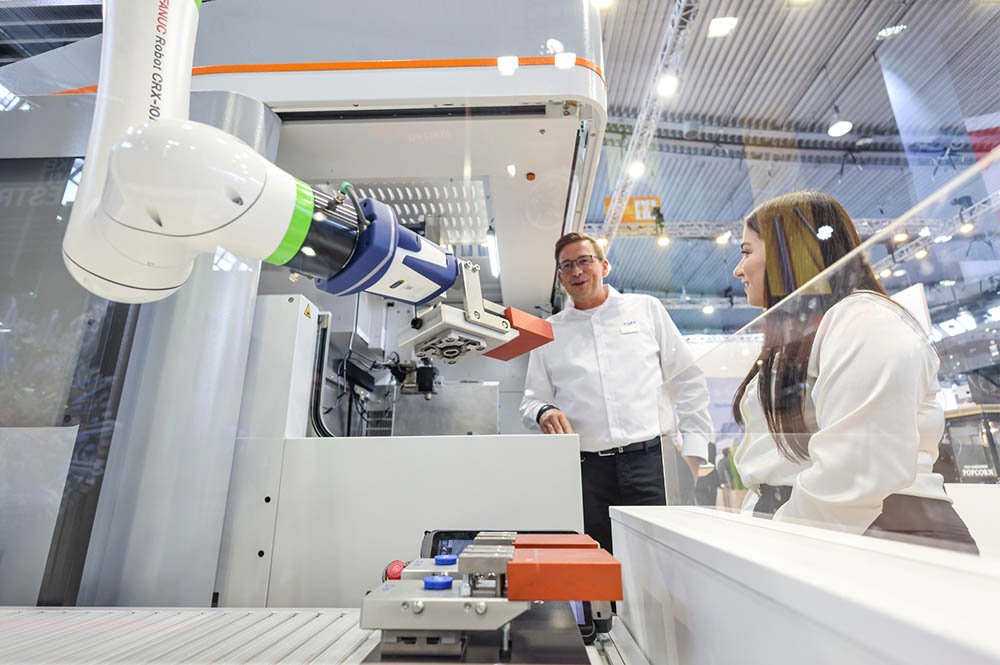
Patrick Schwarzkopf : Collaborative robots (cobots) are now well established. In many applications, however, the term "coexistence" is more accurately used: humans and robots operate without barriers, enabling direct and safe interaction. We are now seeing a further level of even closer collaboration with humanoid robotics. AI is making extraordinary progress in this area: robots are increasingly capable of interpreting their surroundings and acting autonomously and appropriately. Although significant pioneering work is still needed, humanoid robots are gradually emerging from research laboratories and are already finding their first experimental applications in industrial settings. It will still be some time before this technology reaches full maturity for widespread use. At the same time, however, humanoid robotics is accelerating the evolution of close human-machine interaction, for example through the ability to communicate verbally with robots.

AMB : Many of these developments are best appreciated by observing them live. In September, AMB will bring together the entire metalworking ecosystem in Stuttgart: manufacturers, users, and researchers under one roof. What contribution can this unique combination make to the wider adoption of collaborative automation? And why is a visit to the trade fair essential for all metalworking companies considering the introduction of automation solutions?

Patrick Schwarzkopf : A look at the data clearly highlights its significance: according to the International Federation of Robotics (IFR), machine tending—the automatic loading and unloading of workpieces on machine tools—is one of the main applications of robotics. Over the past decade, new annual installations of robots for handling tasks on machine tools have increased from 14,500 in 2015 to 19,000 in 2024. Preliminary data from the IFR indicate that the trend will continue with significant, double-digit growth in 2025. The use of collaborative robots (cobots) has also increased significantly in recent years: in 2024, approximately 65,000 cobots were installed worldwide, representing 12% of all industrial robots. The most significant increases are being seen in mobile robotics, which enables the flexibly connecting different production machines, for example through mobile manipulators, i.e., mobile platforms equipped with a robotic arm. It's hard to find such a comprehensive, focused, and industry-specific overview as that offered by a specialized trade fair. At AMB, you can see and experience firsthand the automation solutions for metalworking by chip removal.

AMB : Thank you for the interview, Mr. Schwarzkopf.

Focus on automation at AMB 2026 in the Oskar-Lapp-Halle (Hall 6)
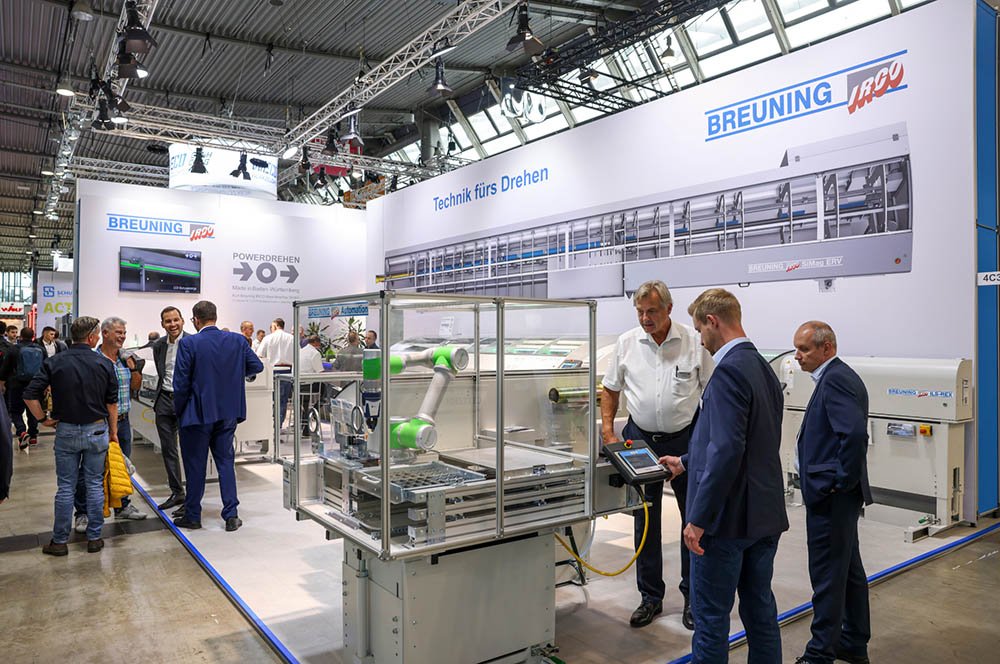
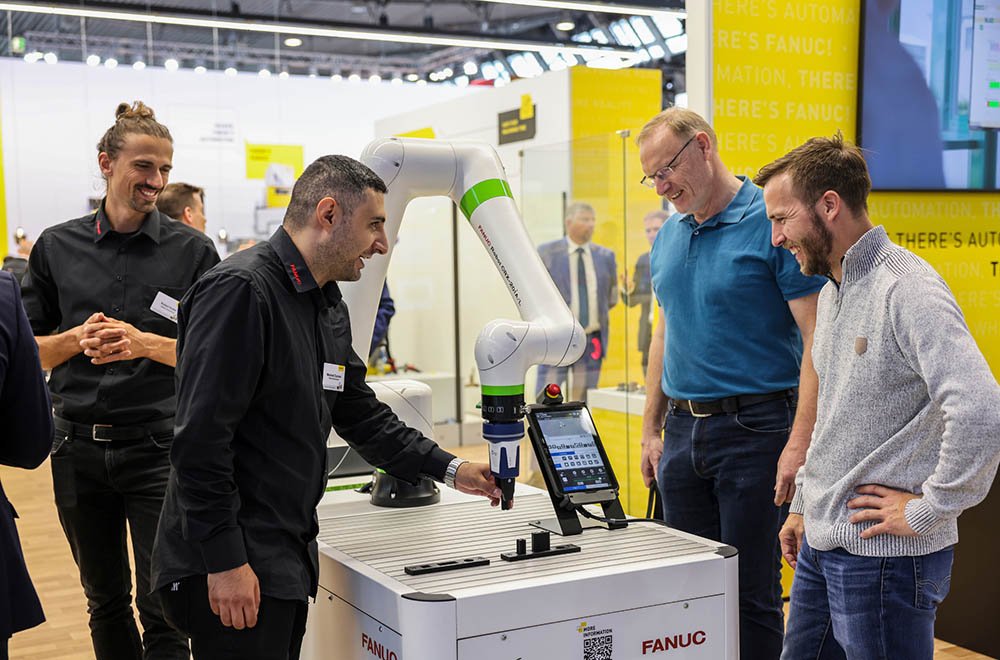
Automation will be a key focus at AMB 2026 in nearly every exhibition hall: from machine tool manufacturers with automation systems to solutions for tools and clamping technology, such as automatic setup. A special highlight will be the Oskar-Lapp-Halle (Hall 6), which will house the "Automation and Handling Technologies" area. Numerous exhibiting companies—including FANUC, KUKA, Cellro, RoboJob, Wassermann Technologie, and many others—will present their latest solutions for production and process management. It's worth checking out the exhibitor list, as here, trade visitors can experience firsthand how robotics, collaborative automation, Industry 4.0 approaches, and the IIoT (Industrial Internet of Things) are evolving metal-cutting processes, introducing new solutions and driving innovation in the industry.

About AMB
Since 1982, AMB has presented the highlights of the international metalworking industry. "Where Metal Comes Alive" will once again be a fixture on the industry's agenda in 2026, this year from September 15 to 19. It is the international marketplace and meeting place for metalworking, showcasing the latest products, technologies, innovations, services, and concepts in all their facets. AMB is supported by the VDMA Präzisionswerkzeuge (Precision Tools), VDMA Software and Digitalization (Software and Digitalization), and the VDW Verein Deutscher Werkzeugmaschinenfabriken e.V. (German Machine Tool Builders' Association).
Weitere Informationen: AMB 2026
AMB 2026: Collaborative Processes Drive Automation

Weitere Artikel, die Sie interessieren könnten

35.bi-mu has closed: technology, conferences, and networking for the 26,000 professionals attending

35.BI-MU , the international biennial exhibition dedicated to the industry manufacturing metal-cutting and metal-forming machine tools, robots, automation, digital and additive manufacturing, auxiliary and enabling technologies, closed on Friday 16 October. The event has been running since Tuesday 13 October in the exhibition halls of fieramilano Rho. Promoted by UCIMU-SISTEMI PER PRODURRE and organized by EFIM-ENTE FIERE ITALIANE MACCHINE , BI-MU offered a broad overview of the sector's international offerings, confirming its position as a key event for manufacturing industry operators, offering them a rich calendar of meetings and numerous opportunities and initiatives designed to foster networking. The 26,000 professional operators present at 35.BI-MU were able to closely observe the offerings of the 448 companies present , 30% of which came from abroad : Austria, China, Finland, Germany, India, Ireland, Spain, Switzerland, Taiwan, Bulgaria, Korea, France, Japan, Ireland, the Netherlands, the United Kingdom, Switzerland, and the USA. The international offerings on display in the pavilions also attracted foreign operators, who accounted for 6% of the total , representing 80 countries , including Germany, Switzerland, Spain, France, Finland, Sweden, Poland, Romania, Portugal, Slovenia, Austria, the United Kingdom, the United States, Canada, Brazil, China, South Korea, Taiwan, Japan, India, Turkey, Vietnam, Uzbekistan, Ukraine, and Egypt. Among them were the 120 guests—including qualified end users, trade analysts, and journalists —of the incoming mission organized by UCIMU-SISTEMI PER PRODURRE, in collaboration with the Italian Trade Agency (ITA) and the Ministry of Foreign Affairs and International Cooperation. ICE-Agenzia and the Ministry of Foreign Affairs and International Cooperation, again in collaboration with UCIMU-SISTEMI PER PRODURRE, also promoted the organization of the Start-up Area , which included around twenty companies whose offerings integrate well with the production of capital goods. The event also welcomed a delegation of representatives from the European Community's Machinery Unit who, together with representatives from CECIMO, visited the exhibition and met with UCIMU's top management for an open discussion on issues of interest to the sector. With the new Associations & Network Hub initiative, BI-MU has reserved a dedicated space for manufacturing business associations representing key sectors, both supply chain and local, with the aim of encouraging dialogue, understanding, and the exchange of useful information among the stakeholders involved in the fair. In addition to networking, considerable attention was paid to collateral initiatives for in-depth cultural exploration of specific themes, aimed at the event's diverse audiences: exhibitors, visitors, students, researchers, education professionals, the media, and institutions. Over 50 events were organized as part of BI-MU by the organizers and institutional partners. Among the meetings hosted in the BI-MU Arena, the most well-attended was the Inaugural Conference chaired by Riccardo Rosa , president of UCIMU-SISTEMI PER PRODURRE, with: Valentino Valentini , Deputy Minister of the Ministry of Business and Made in Italy, Giovanni Bozzetti , President of Fondazione Fiera Milano, Simona Greco , Hosted Exhibitions Director of Fiera Milano, Luca Durante , Head of the Capital Goods Office of ICE-Agenzia, Gian Piero Cutillo , Co-General Manager of Leonardo, and Roberto Vavassori , Executive Director of Brembo and president of ANFIA, moderated by Paolo Bricco , Correspondent of Il Sole 24 Ore. The two special forums dedicated to the Aerospace & Defense and Energy sectors attracted great interest, analyzed through the direct testimony of the production and operations directors of some of the main international players and the CEOs of several Italian SMEs. In terms of training, the VLF4EU (Virtual Learning Factory for EU) International Conference was particularly significant, with the participation of around thirty researchers from Denmark, France, Slovenia, Spain, Sweden, and Italy. The dialogue between young people and the world of work was explored in depth at the meeting " Value, Future, Impact. Work According to the New Generation, " organized by ANIPLA with the patronage of the UCIMU Foundation. These conferences were part of the Skills Area meetings calendar. Set up in pavilion 24, the Skills Area also hosted several initiatives promoted by UCIMU Academy and FONDAZIONE UCIMU , including ROBOTGAMES , the automation and robotics competition aimed at secondary school students, now in its second edition. Approximately 4,000 students , accompanied by their professors, were accredited in this space. During the four days of the exhibition, they took self-guided tours of the exhibitors' stands, guided by tutors—all students from ITS INCOM —to observe the latest-generation technologies up close. The Additive Future Lab , an initiative promoted by AITA, the Italian Association of Additive Technologies, made its debut at 35.BI-MU. This initiative is dedicated to ITS students and additive manufacturing technologies. The awards ceremony was hosted at the association's stand within AMITALY , the BI-MU area dedicated to additive manufacturing. A brand new addition to the 35th edition was the BI-MU FutureTech Award , designed to recognize the best innovations presented at the fair in the categories of mechanical innovation, digitalization, and sustainability. And to celebrate 70 years since the first BI-MU was organized, EFIM, in collaboration with the Historical Archives of the Fondazione Fiera Milano, has created “ 70 Years of Machine Tools ,” a photographic exhibition that collects, in no particular order, some testimonies of the machine tool biennial from its beginnings to the present day. The manufacturing industry's interest in the event is also measured by activity on the bimu.it website and digital channels (LinkedIn, Instagram, Facebook, X, YouTube). Between January 1, 2025, and October 16, 2026, the bimu.it website attracted 80,000 unique visitors (+7% compared to 2024). The BI-MU social media community now has 12,419 registered followers (+14%) compared to the end of the last BI-MU edition. Of all the event's profiles, LinkedIn has the most active activity, followed by Instagram. While waiting for 36.BI-MU, scheduled for October 10-13, 2028, the next appointment for industry professionals is EMO MILANO 2027, from October 4-8, 2027, also at fieramilano.

02/11/2026 Mehr lesen

Ucimu: orders index in the third quarter of 2026 rise (+10.5%) foreign orders (+24.7%); domestic ord

In the third quarter of 2026, the machine tool orders index compiled by the UCIMU-SISTEMI PER PRODURRE Study & Business Culture Centre recorded a 10.5% increase compared to the July-September 2025 period . In absolute value, the index stood at 58.9 (base 100 in 2021). In particular, orders collected across borders grew by +24.7% compared to the third quarter of 2025, for an absolute value of 108.6. Order intake in Italy, however, decreased by 7.1% compared to the same period of the previous year. The absolute value of the index stood at 14.3. Riccardo Rosa , President of UCIMU-SISTEMI PER PRODURRE, stated: " Domestic demand remains weak despite the numerous ongoing negotiations. The uncertainty of the international context and the increase in energy costs are clearly impacting the activity of Italian manufacturing operators, who are postponing investments pending greater clarity. We are therefore confident ," added President Riccardo Rosa , " that Italian demand will be able to regain momentum, also supported by the hyper-depreciation measure which, in version 5.0, allows for better planning of investments, which can be spread out until September 2028. " Italian manufacturers' activity on foreign markets, however, has been decidedly dynamic. In addition to the United States, where demand remains particularly strong, Germany is also beginning to show signs of recovery: certainly good news for the Italian industry in the sector. According to data processed by the UCIMU-SISTEMI PER PRODURRE Study & Business Culture Centre, in the first half of 2026 (latest available data), the main outlet markets for Italian supply in the sector were the United States (329 million euros +12.6%) and Germany (137 million euros, +7.6%), followed by France, Poland, and Spain. “In particular, the aerospace and defense sectors, as well as the energy sector, are driving orders, regardless of the country of reference,” concluded Riccardo Rosa . These are the latest sector data presented by the president of UCIMU-SISTEMI PER PRODURRE, Riccardo Rosa , on the occasion of the inauguration of 35.BI-MU, the international sector event taking place at fieramilano Rho from 12 to 16 October . Speakers at the meeting chaired by Rosa included Valentino Valentini , Deputy Minister of the Ministry of Enterprise and Made in Italy; Giovanni Bozzetti, President of Fondazione Fiera Milano; Simona Greco , Hosted Exhibitions Director of Fiera Milano; and Luca Durante , Head of the Capital Goods Office at ICE-Agenzia. The second part of the event featured an interview with Gian Piero Cutillo, Co-General Manager of Leonardo, and Roberto Vavassori , Executive Director of Brembo and President of ANFIA, conducted by Paolo Bricco, Special Correspondent, Il Sole 24 Ore. The event features over 400 companies , spread across a total area of ​​40,000 square meters in pavilions 22 and 24. The spotlight will be on machine tools, robotics, automation, additive manufacturing, digital manufacturing, artificial intelligence, measurement and quality control systems, components, and enabling technologies for the smart factory. The event, promoted by UCIMU-SISTEMI PER PRODURRE and organized by EFIM-ENTE FIERE ITALIANE MACCHINE, significantly enhances the thematic cultural dimension. Over 50 events are planned , including conferences, workshops, and round tables. New features this year include two special forums dedicated to the Aerospace & Defense and Energy sectors, strategic sectors that will be analyzed through the direct testimony of production and operations directors of some of the main international players and the CEOs of several Italian SMEs. In terms of training, the VLF4EU (Virtual Learning Factory for EU) International Conference is particularly relevant, focusing on an innovative training system based on the Digital Twin of the factory. The conference will feature around thirty researchers from Denmark, France, Slovenia, Spain, Sweden, and Italy. The relationship between young people and the world of work will be explored in depth at the meeting " Value, Future, Impact. Work According to the New Generation ," organized by ANIPLA with the patronage of the UCIMU Foundation. These conferences are part of the Skills Area 's calendar of meetings. Located in Pavilion 24, the Skills Area will host initiatives promoted by UCIMU Academy and the UCIMU Foundation . Among these, ROBOTGAMES , the automation and robotics competition for secondary school students, now in its second edition, will once again be held.

13/10/2026 Mehr lesen

Mechanical exports exceed 20 billion euros in the first half of the year

The figures presented at Anima Export Days 2026: +2.8% compared to the same period last year. Exports are growing in the USA, China, and Germany. Exports of the mechanical engineering sector represented by Anima Confindustria reached €20.4 billion in the first half of 2026, up 2.8% compared to the same period in 2025. The data, processed by Anima's Statistics Office based on Istat data, were presented during the Brescia leg of Anima Export Days , the initiative dedicated to the internationalization of the Italian mechanical engineering sector. Running from September 28th to October 1st, the event is bringing together companies in the sector with selected international buyers. Now in its sixth edition, the Export Days are a collaboration between Anima Confindustria, the Ministry of Foreign Affairs and International Cooperation (MAECI), and the Italian Trade Agency (ITA), with the aim of fostering new trade relations and supporting the strengthening of Italian companies' presence in foreign markets . This year, the B2B meetings involve operators from over 20 countries and are taking place in four locations : Borgosesia, Turin, Brescia, and Bassano del Grappa. The initiative comes at a time when geopolitical tensions and uncertainties over trade policies continue to impact international trade. Against this backdrop, data for the first half of 2026 paint a resilient picture for the mechanical engineering sector, represented by Anima. Exports from Anima's sectors totaled €20.4 billion , up 2.8% from €19.8 billion in the same period in 2025. The trend confirms the sector's strong international vocation , albeit with varying trends. The main export components include valves and faucets , gas turbines, hydraulic pumps, and air conditioning systems. Other sectors are showing positive results, while others are experiencing a decline. Geographically, the United States remains the leading destination market for exports in the animal and animal sectors, with €2.38 billion in the first six months of 2026, up 2.4% compared to the same period of the previous year. Germany follows, with €1.99 billion (+4.8%), and France, with €1.81 billion (+2.9%). Alongside the more established European markets, some particularly significant trends are emerging in non-EU areas, starting with China, the Middle East, and North Africa. Despite a general decline towards the Gulf countries (-3.7%), exports to Saudi Arabia grew by 14.6% (665.1 million euros) , supported by the sectors related to process plants, energy, infrastructure and cooling. In China , exports of the Anima sectors grew by 22.3% and reached almost 720 million euros . The aeraulic systems sector was the main driver of this increase. Steam turbines and air compressors also recorded good growth in China. Algeria's growth was even more significant, rising 146.7% from €173.3 million to €427.6 million. This result was primarily driven by technologies such as gas turbines (which account for approximately 47% of total exports to the country), valves and taps, as well as pressure products and equipment. These flows are often tied to individual orders and therefore not necessarily characterized by continuous trends, but the data highlights the ability of Italian companies to seize opportunities even in rapidly developing markets. "The 2.8% growth in exports in the first half of the year confirms the ability of Italian mechanical engineering to maintain a competitive position on international markets, even in a period characterized by geopolitical tensions and trade uncertainty. The United States remains the primary destination market, while the results in China and Algeria demonstrate the ability of companies to seize opportunities in different markets. This is a sign of resilience that must be accompanied by greater diversification and a strengthened international presence. In this regard, the Export Days represent a concrete tool for creating new relationships and business opportunities," stated Pietro Almici, president of Anima Confindustria . On the import front, in the first six months of the year, the Anima sectors recorded a 1.2% increase, for a total value of 9.73 billion euros; this figure completes the current trade picture and confirms the centrality now assumed by international markets beyond the European one. It is in this context that Anima is renewing its Export Days , transforming market analysis into a concrete opportunity for supply and demand to meet.

05/10/2026 Mehr lesen

Abonnieren Sie unseren Newsletter
Um über die neuesten Nachrichten der Industriewelt auf dem Laufenden zu bleiben

Kontaktieren Sie uns
Image Newsletter Lindustriale

L'industriale srl 2026 - Alle Rechte vorbehalten
Datenschutzerklärung - Cookies

Top
This website is protected by reCAPTCHA, therefore the Google privacy policy and terms of service apply.