Valvitalia Group wins $30 million contract for US Desert Southwest gas pipeline

Veröffentlichte die 02/07/2026
Valvitalia Group wins $30 million contract for US Desert Southwest gas pipeline

The order strengthens the order backlog, which has risen to €263 million.

GOVERNANCE: GROUP'S CORPORATE BODIES RENEWED FOR THE NEXT THREE-YEAR PERIOD


The supply concerns 94 large diameter valves that will be manufactured in the Rivanazzano Terme plant and that will be used for a new 840 km infrastructure that will connect Texas to New Mexico and Arizona.

President Salvatore Ruggeri: "This award confirms our ability to participate in major international energy infrastructure programs and leverages the industrial know-how developed in Italy."

Executive Vice President Massimiliano Ruggeri: "The Americas are an increasingly central market for the Group and offer interesting prospects for further growth in the medium to long term."


The Valvitalia Group announces that it has been awarded a new contract valued at approximately $30 million for the supply of valves for the Desert Southwest project, one of the most significant energy infrastructure projects currently under development in the Southwest United States.

The order concerns the production of 94 48-inch valves, which will be entirely designed and manufactured at the Rivanazzano Terme (PV) industrial site, confirming the central role of Made in Italy and the Group's technological expertise in the creation of highly complex solutions for major international energy projects. Delivery of the supply is scheduled for 2027.

The order acquisition contributes to the growth of the Group's order book, which has risen to approximately €263 million, and further strengthens Valvitalia's positioning in the Americas, currently the Group's primary destination market. Overall, orders from North and South America account for over 37% of total bookings, confirming the continent's strategic importance for business development.

To support its commitment in the region, the Group can also count on the presence of Valvitalia USA staff in Houston, Texas. Led by Massimiliano Ruggeri, the organization ensures stable coverage of the American market and supports Valvitalia's development efforts in a region of primary global importance.

Salvatore Ruggeri , President of Valvitalia, commented: "Winning this important contract confirms the trust our clients place in the expertise, reliability, and quality of the solutions we design and implement. Participating in a strategic infrastructure project like Desert Southwest means making a concrete contribution to the energy development of a rapidly growing area and, at the same time, confirms our ability to successfully participate in major international infrastructure programs. This result enhances the wealth of expertise we have built over the years and the crucial contribution of our people. The quality of our order backlog allows us to look confidently to future growth prospects and confirms the validity of our path, supported by an increasingly qualified presence in energy markets with the greatest potential."

Massimiliano Ruggeri , Executive Vice President of Valvitalia, stated: "This award is an important recognition of the work we've done over the years to consolidate our presence in the Americas and strengthen relationships with leading energy sector operators. The US continues to be a key market for Valvitalia and offers exciting development opportunities, supported by significant investments in energy infrastructure. At the same time, we are continuing our growth in South America, where we see favorable prospects for business expansion. The quality of the opportunities and ongoing dialogue with leading clients allow us to confidently look forward to the evolution of our presence in the region."

Desert Southwest
The US infrastructure, estimated at $5.6 billion, will extend for approximately 840 kilometers, connecting the Permian Basin, one of North America's most important hydrocarbon fields located between West Texas and New Mexico, to end-use markets in the southwestern United States, particularly Arizona and New Mexico. The pipeline's construction will meet the region's growing energy demand, supporting population growth and regional economic development.

Dedicated Gas Pipeline
Furthermore, among the most recent and significant opportunities in South America, there is the supply of valves for the Gasoducto Dedicado project in Argentina, a 480-kilometer gas pipeline under construction in the Province of Neuquén.

The leadership of the group has been confirmed for the next three years.
Valvitalia's Shareholders' Meeting and Board of Directors also renewed the Group's governing bodies for the three-year period 2026-2028, confirming the continuity of the governance that has accompanied the development and growth path of recent years.

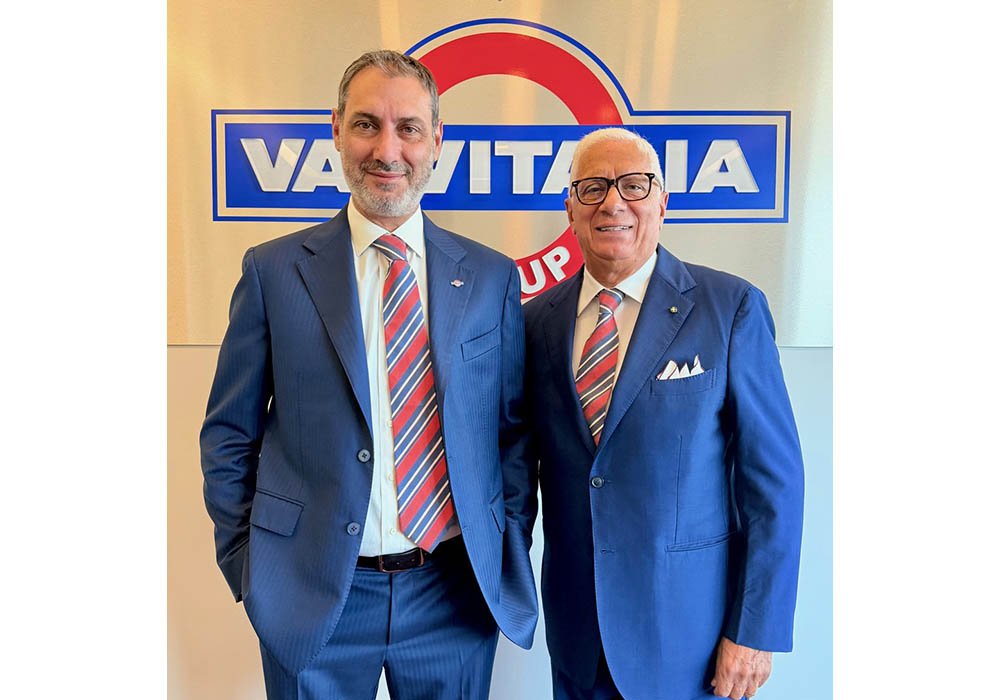
Salvatore Ruggeri was confirmed as President, Massimiliano Ruggeri as Executive Vice President, and Andrea Forzi as Chief Executive Officer.

The new Board of Directors also includes Manuela Carra, Angela Colmellere, Paolo Rinaldi, and Manuela Sabbatini. Franco Gianni and Andrea Alghisi will also participate in the Board of Directors' meetings as observers.

At the same time, the new Board of Statutory Auditors was appointed, composed of Micol Marisa as President, Annalisa Zanini and Giuseppe Galeano as effective Auditors.

The renewal of these positions ensures strategic and managerial continuity for the Group at a time marked by a growing international presence and significant development opportunities in its key markets.

Weitere Informationen: Gruppo Valvitalia

Weitere Artikel, die Sie interessieren könnten

Ucimu: orders index for the second quarter of 2026 still down (-25.8%); foreign orders (-15.3%); dom

Riccardo Rosa, president of UCIMU: "We'll have to wait until the next few months to see the full effects of the hyper-depreciation, but we're very confident this measure will last until September 2028." In the second quarter of 2026, the machine tool orders index compiled by the UCIMU-SISTEMI PER PRODURRE Study & Business Culture Centre recorded a decline of -25.8% compared to the April-June 2025 period . In absolute value, the index stood at 47.8 (base 100 in 2021). The result expresses the difficulties that Italian machine tool manufacturers have encountered both on the domestic and foreign markets. In particular, orders collected from abroad decreased by -15.3% compared to the second quarter of 2025, for an absolute value of 63.2. Order intake in Italy also declined , falling 38.7% compared to the same period of the previous year. The absolute value of the index stood at 33.1. Riccardo Rosa, president of UCIMU-SISTEMI PER PRODURRE, stated: “The uncertainty of the geopolitical context—shaken by wars, the Hormuz crisis, and the decidedly worrying attitude of the President of the United States toward international politics—has profoundly undermined the already precarious balance in which the industry found itself operating.” "The decline in international deliveries, given the current situation, is understandable, and we expected it. Business has slowed, but, as is our custom, we've tried to focus our offerings on those areas less directly affected by conflicts and critical issues, diversifying our product offerings wherever possible." "It is certain ," continued President Riccardo Rosa , " that the investment figures and values ​​once ensured by the automotive industry cannot be replaced by the demand expressed by other sectors, however dynamic, such as defense, aerospace, and energy. For this reason, once again, we ask our representatives in Europe to reconsider their decision and adopt the principle of technological neutrality when defining automotive development plans. This approach would allow the industry, and its entire supply chain, to properly manage the ongoing transition, not only respecting the environment but also safeguarding, where possible, employment." Domestically, businesses awaited clarifications on the hyper-depreciation program to confirm their purchasing intentions. Since June 12th, the day all the operational steps were completed, the hyper-depreciation program has been bearing fruit. We immediately noticed a change in attitude among Italian users: orders are starting to arrive. "We'll have to wait a few more months, however, for the effect to be fully reflected in our data, but we're definitely confident. This is also because, in the meantime, we have data from the Ministry of Business and Made in Italy, which, as of July 9th, reported the submission of 7,000 communications on the GSE platform, worth €2.5 billion." MIMIT deserves great credit for having established a multi-year term for this incentive. Its effectiveness until September 2028 should ensure thoughtful planning of investments in new machine tools and production technologies by Italian customers, also allowing us manufacturers to plan our production activities over the medium term. "The hope ," concluded Riccardo Rosa , " is to soon see the Italian market return to the levels it experienced in 2021-2022, when it was worth over €6 billion. This is also because our manufacturing industry needs to innovate to remain competitive in an international context where digital and AI are completely reshaping the rules of the game."

16/07/2026 Mehr lesen

Amb 2026: collaborative processes drive automation

Central topic: Automation: Patrick Schwarzkopf (VDMA) discusses collaborative processes, artificial intelligence, and automation for SMEs using no-code solutions. As manufacturing companies strive to make their processes more efficient and flexible, automation solutions play a key role, especially in areas where people and machines are increasingly collaborating. AMB 2026 addresses this key topic with a practical approach and demonstrates how collaborative processes are evolving across the entire metal cutting process chain. In this interview, Patrick Schwarzkopf, Director General of the VDMA Robotics and Automation Association, analyzes the key factors driving this evolution and provides an overview of the developments companies should keep an eye on. Automation as one of the three central themes: Collaborative processes are gaining increasing importance AMB : The robotics and automation industry is forecasting a 5% decline in revenue by 2026; nevertheless, pressure on manufacturing companies to automate their processes continues to grow. Why is now the right time to focus on collaborative processes, and what factors are driving companies to take this step? Patrick Schwarzkopf : It's true, we're still observing a marked caution in investments, due to several reasons: from geopolitical tensions to the well-known challenges related to the competitiveness of production sites. However, the trend toward automation remains unchanged. Demographic change will become even more evident in the coming years; this will make it necessary to automate an increasing number of activities to support the remaining qualified personnel. Only in this way can we remain competitive. The interaction between humans and machines will be crucial. The extremely rapid development of artificial intelligence (AI), particularly generative AI and so-called physical AI, opens up new possibilities, for example through agent AI (Agentic AI) and through the much simpler use and programming of automation solutions. AMB : For a long time, automation was primarily designed for large-scale production. Today, however, robotic solutions are a viable option even for small series. How far has this evolution come, and what does a small business actually need to introduce automation into its production process? Patrick Schwarzkopf : Automation for SMEs is making enormous strides. Technological developments in recent years have been extraordinary and have significantly reduced the barriers to entry for small and medium-sized enterprises. Typical scenarios are "low volume, high mix," characterized by low production volumes and a high degree of product diversity. In these contexts, it is crucial that programming can be performed quickly, easily, and without significant staff effort. Numerous no-code solutions exist today for this purpose, requiring no programming knowledge. Automation workflows can be configured via graphical interfaces with drag-and-drop functionality, while robot trajectories can be taught through manual guidance (hand-guiding) and memorized at the push of a button. Major manufacturers have long been offering solutions specifically designed to meet the needs of SMEs. Pragmatic configurations, such as a robot working overnight, are often sufficient, thus enabling a significant increase in productivity. The obstacle is often less technological than cultural: many companies continue to believe that automation is inevitably too complex or too expensive. This belief is now obsolete, because solutions already exist and are easily observed at specialized trade shows like AMB. A useful reference point, for example, is Go4Robotics, the online platform of the International Federation of Robotics (IFR). AMB : As programming and operation become easier, direct collaboration between humans and robots is also becoming increasingly practical. Today, the two increasingly work side by side, without the need for protective barriers: it was precisely the development of AI-supported sensor systems that made this approach truly feasible. What concrete changes does all this mean for the shop floor, and how should companies rethink processes and the role of people? Patrick Schwarzkopf : Collaborative robots (cobots) are now well established. In many applications, however, the term "coexistence" is more accurately used: humans and robots operate without barriers, enabling direct and safe interaction. We are now seeing a further level of even closer collaboration with humanoid robotics. AI is making extraordinary progress in this area: robots are increasingly capable of interpreting their surroundings and acting autonomously and appropriately. Although significant pioneering work is still needed, humanoid robots are gradually emerging from research laboratories and are already finding their first experimental applications in industrial settings. It will still be some time before this technology reaches full maturity for widespread use. At the same time, however, humanoid robotics is accelerating the evolution of close human-machine interaction, for example through the ability to communicate verbally with robots. AMB : Many of these developments are best appreciated by observing them live. In September, AMB will bring together the entire metalworking ecosystem in Stuttgart: manufacturers, users, and researchers under one roof. What contribution can this unique combination make to the wider adoption of collaborative automation? And why is a visit to the trade fair essential for all metalworking companies considering the introduction of automation solutions? Patrick Schwarzkopf : A look at the data clearly highlights its significance: according to the International Federation of Robotics (IFR), machine tending—the automatic loading and unloading of workpieces on machine tools—is one of the main applications of robotics. Over the past decade, new annual installations of robots for handling tasks on machine tools have increased from 14,500 in 2015 to 19,000 in 2024. Preliminary data from the IFR indicate that the trend will continue with significant, double-digit growth in 2025. The use of collaborative robots (cobots) has also increased significantly in recent years: in 2024, approximately 65,000 cobots were installed worldwide, representing 12% of all industrial robots. The most significant increases are being seen in mobile robotics, which enables the flexibly connecting different production machines, for example through mobile manipulators, i.e., mobile platforms equipped with a robotic arm. It's hard to find such a comprehensive, focused, and industry-specific overview as that offered by a specialized trade fair. At AMB, you can see and experience firsthand the automation solutions for metalworking by chip removal. AMB : Thank you for the interview, Mr. Schwarzkopf. Focus on automation at AMB 2026 in the Oskar-Lapp-Halle (Hall 6) Automation will be a key focus at AMB 2026 in nearly every exhibition hall: from machine tool manufacturers with automation systems to solutions for tools and clamping technology, such as automatic setup. A special highlight will be the Oskar-Lapp-Halle (Hall 6), which will house the "Automation and Handling Technologies" area. Numerous exhibiting companies—including FANUC, KUKA, Cellro, RoboJob, Wassermann Technologie, and many others—will present their latest solutions for production and process management. It's worth checking out the exhibitor list, as here, trade visitors can experience firsthand how robotics, collaborative automation, Industry 4.0 approaches, and the IIoT (Industrial Internet of Things) are evolving metal-cutting processes, introducing new solutions and driving innovation in the industry. About AMB Since 1982, AMB has presented the highlights of the international metalworking industry. "Where Metal Comes Alive" will once again be a fixture on the industry's agenda in 2026, this year from September 15 to 19. It is the international marketplace and meeting place for metalworking, showcasing the latest products, technologies, innovations, services, and concepts in all their facets. AMB is supported by the VDMA Präzisionswerkzeuge (Precision Tools), VDMA Software and Digitalization (Software and Digitalization), and the VDW Verein Deutscher Werkzeugmaschinenfabriken e.V. (German Machine Tool Builders' Association).

09/07/2026 Mehr lesen
Abonnieren Sie unseren Newsletter
Um über die neuesten Nachrichten der Industriewelt auf dem Laufenden zu bleiben
Kontaktieren Sie uns
Image Newsletter Lindustriale
Dati Legali

L'industriale s.r.l.
P. IVA: 12212870153
Codice Fiscale: 12212870153

Sede Legale

Via Carlo Dolci, 32
20148 Milano (MI)
Italy

Registro Imprese

Iscrizione R.I.: 12212870153
REA: MI-1539011
Capitale sociale: Euro 10.400,00 i.v.

Top
This website is protected by reCAPTCHA, therefore the Google privacy policy and terms of service apply.