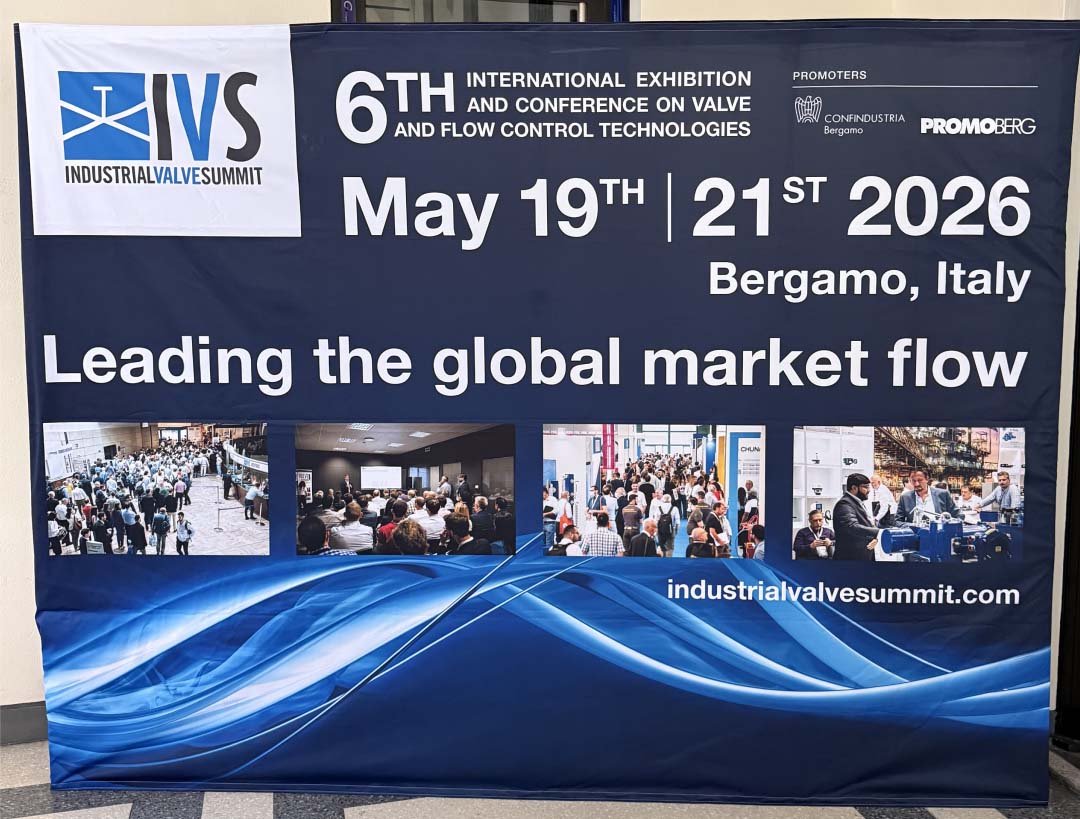
The leading Summit for the industrial valve and flow control industry returns, scheduled at the Bergamo Exhibition Centre, in Italy, from May 19th to 21st, 2026
A new record in exhibitors has been reached, with 416 companies (+30% vs. 2024), including nearly 100 international firms (+56%)
Two additional halls bring the total to four, an extra exhibition day, and a 30% increase in technical-scientific conferences, covering frontier topics such as AI, hydrogen, renewables, CCUS and nuclear, both next-generation and conventional
A preview of the IVS-Prometeia Observatory “The Oil & Gas Valve Industry in Italy” 2026 was presented
The press conference presenting the sixth edition of IVS - Industrial Valve Summit, the leading international event dedicated to industrial valve technologies and flow control solutions, was held in Milan. The event, promoted by Servizi Confindustria Bergamo and Promoberg, will take place at the Bergamo Exhibition Centre, in Italy, from May 19th to 21st, 2026.
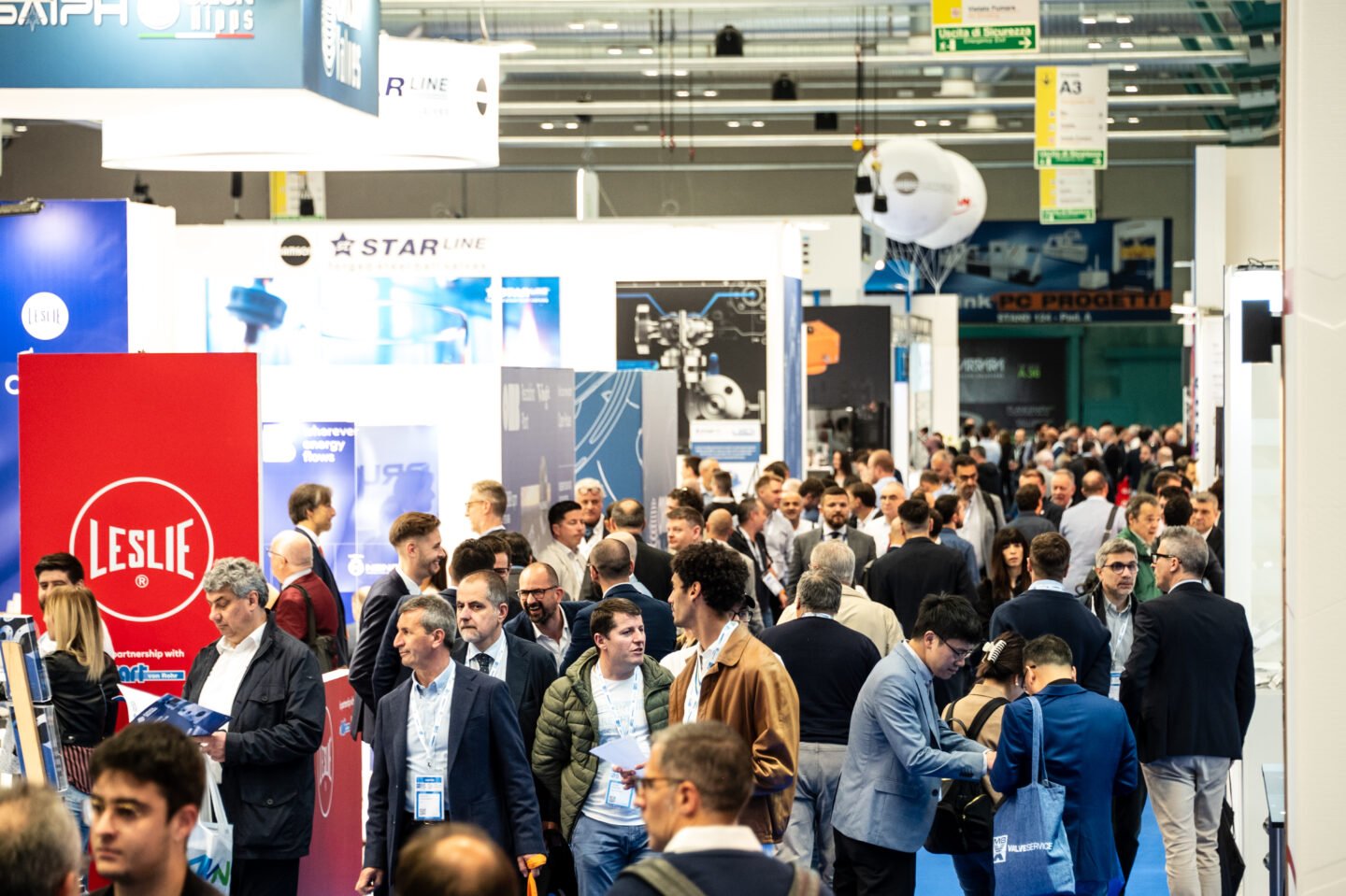
IVS 2026 marks a further step forward in the event’s growth trajectory: Summit organizers anticipate record figures, starting with participating companies. A total of 416 exhibitors (+30% vs. 2024) from 20 countries will attend: alongside Italy, Spain, Germany, France, the UK, the USA, the Czech Republic, Poland, the Netherlands, Portugal, Austria, Belgium, Canada, Croatia, Finland, Ireland, Mexico, South Africa, Turkey and the UAE. The international component is expanding significantly, with around 100 companies (+56%), representing the highest foreign participation ever recorded.
The exhibition layout at the Bergamo Exhibition Centre will expand with two additional halls, bringing the total to four and reaching a surface area of 21,400 square meters - approximately 40% larger than the previous edition. The program will extend to three full days open to the public, evolving from a two-day exhibition into a full-fledged “valve week.” This development reflects the organizers’ intention to meet the growing demand for content, networking opportunities and high-level industry dialogue.
The strategic value of IVS - Industrial Valve Summit lies in its role as a true forum for the entire supply chain, where shared objectives and distinctive technical expertise converge, fostering dialogue among companies, institutions, research bodies and international operators. In a context marked by geopolitical tensions, the Summit takes on an even more relevant role as a platform for alignment and scenario analysis, offering stakeholders a qualified space to interpret ongoing dynamics, assess impacts across the supply chain and guide industrial strategies. In this context, the initiative plays an enabling role, strengthening the competitive positioning of the national manufacturing system and facilitating access to industrial relationships and development opportunities on a global scale.
The decision to anchor the event in Bergamo - a key industrial district - follows a clear rationale aimed at enhancing a highly specialized production ecosystem. Over the years, the event has established itself as a driver for territorial promotion, generating a network of side initiatives that extend its impact beyond the exhibition days, contributing to lasting positive effects for the local area.
Scientific program
Thanks to the scientific contribution of VALVEcampus - the association dedicated to training industrial valve manufacturers and a long-standing partner of the Summit - IVS 2026 will offer a technical program positioned at the forefront of innovation, designed to address the sector’s most pressing challenges. Particular attention will be given to emerging technologies and opportunities in new application markets such as hydrogen, nuclear, CCUS (Carbon Capture Utilisation and Storage) and renewable energy - key strategic drivers for industrial development.
The overall agenda includes 68 events (+30% compared to 52 in 2024), including conferences, roundtables and technical sessions, structured around six main thematic areas: standardisation and standard development; digital technologies applied to valves, actuations and control; valve design and materials for severe services; advanced sealing solutions for industrial valves; AI applied to mechanical design, procurement and manufacturing; additive manufacturing.
Additional sessions will address key topics such as sealing-material innovation, fugitive emissions and the impact of PFAS substances. A dedicated focus on AI will include seven conferences exploring its applications across different industrial contexts, alongside contributions on decentralized production and additive manufacturing.
The Summit will also host four high-level technical roundtables on subsea valve actuation in deepwater environments, choke valve applications in high-pressure systems, control valve performance and safety in critical applications, and surface treatment technologies to enhance resistance to erosion and corrosion. A further roundtable will focus on nuclear energy, involving regulators, companies, associations and institutions, with insights on both next-generation (Small Modular Reactors) and conventional nuclear technologies.
Partnerships
International participation is further supported by synergies with ICE Agency, AVR ANIMA, Confindustria Assafrica & Mediterraneo and UNIDO ITPO Italy. IVS has also entered into agreements with BVAA (the association representing valve actuators manufacturing, servicing, industry suppliers, stockists and industrial valve distributors in the UK), Fluidex (the Spanish association of exporters of fluid handling equipment, process solutions and technologies), SPAP (the Polish industry association for companies operating in the industrial valves and fittings sector), CzechTrade (the Czech government agency for trade promotion), Evolen (the French association of companies and professionals serving Energies), CEIR (the European association of valve manufacturers), SPE (Society of Petroleum Engineers - Italian Section) and ESA (European Sealing Association), also through the presence of country pavilions.
These partnerships will bring international delegations of institutional representatives, entrepreneurs, decision-makers, speakers and specialized operators. Organizers have invited qualified buyers from leading End Users and EPC contractors, creating a platform for interaction across the entire energy sector. This also opens opportunities for entry into and consolidation within emerging markets, particularly in Africa, where demographic growth and increasing energy demand make it an area of growing interest for supply-chain development.
The history of IVS
From 5,700 visitors in 2015 - the first edition, which hosted 100 companies - to 8,000 in 2017 and 10,800 in 2019, the Summit has experienced steady growth, both in attendance and in participant quality. In 2020, as preparations for the fourth edition were underway, the Covid-19 pandemic forced a halt. The exhibition centre was converted into a temporary hospital, supporting the community and strengthening the regional healthcare system. The 2021 edition was postponed to 2022, when IVS reached a new milestone: 12,000 visitors from over 60 countries and nearly 300 exhibitors (+17% vs. 2019), confirming its growing relevance despite ongoing mobility restrictions.
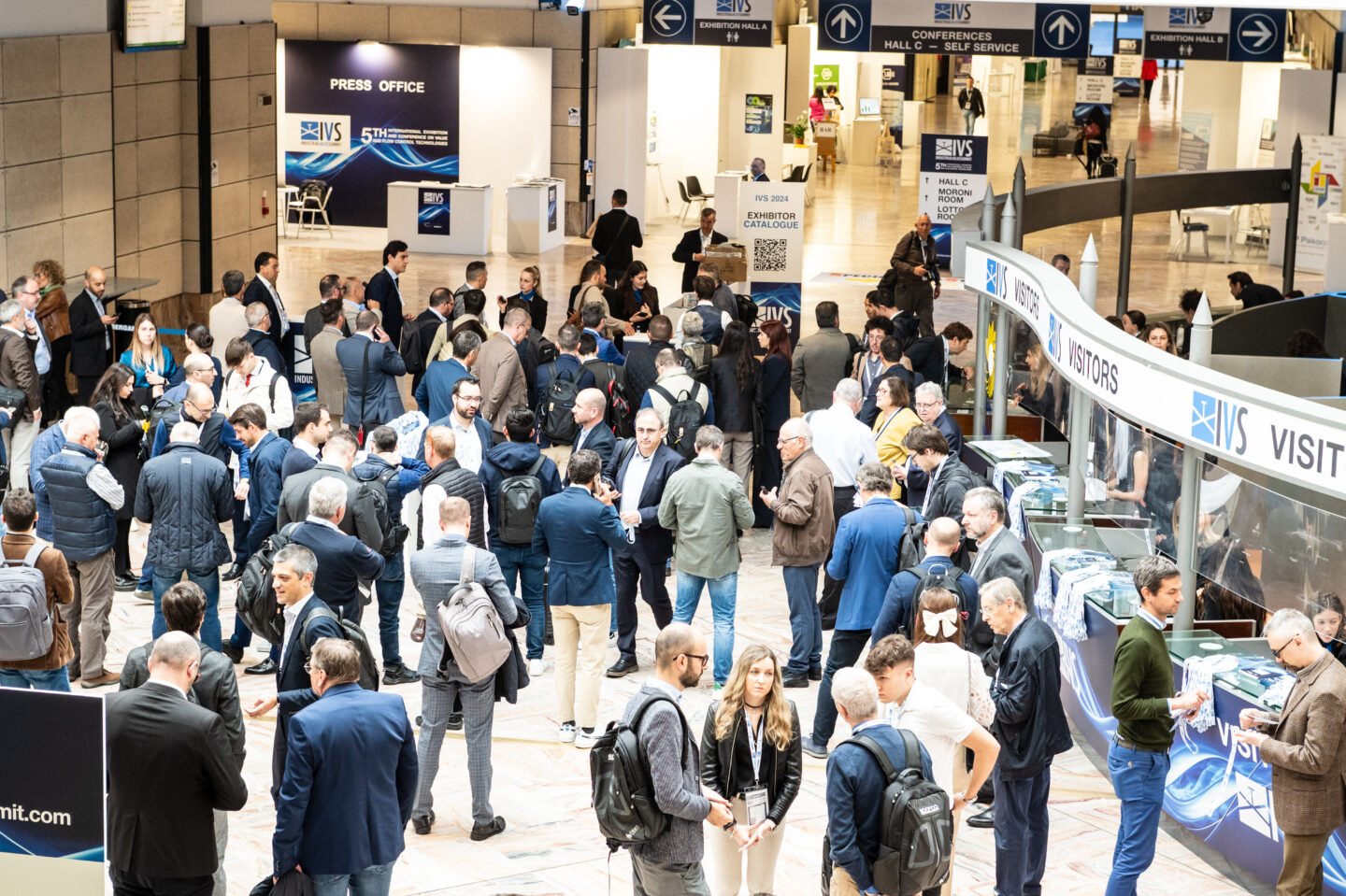
The fifth edition in 2024 recorded 15,000 participants (+25%) from 69 countries and 325 exhibiting companies (+13%) from 14 nations, with international attendance doubling compared to 2022.
Preview of the Observatory “The Oil & Gas Valve Industry in Italy” 2026
A preview of the 2026 edition of the IVS-Prometeia Observatory “The Oil & Gas Valve Industry in Italy,” developed with the contribution of the Research Department of Confindustria Bergamo, was presented. The report highlights the state of the Italian industrial valve sector, confirming it as a strategic segment of national manufacturing and a benchmark within the European competitive landscape.
The industry includes 140 companies, over 10,000 employees and a production value consistently exceeding €3 billion. With approximately 38% of total European production (up from 36% in 2024), Italy confirms its leadership in the Oil & Gas valve market, ahead of Germany (30%) and France. Lombardy stands out as the sector’s production hub: within the Province of Bergamo and a 100 km radius, 90% of the national sector’s total turnover is generated.
The year 2024 remained highly favorable, marking a third consecutive double-digit increase in sales (+14% vs. 2023), supported by backlog from previous years and a strong improvement in profitability: EBITDA margin reached 11.5% (+2.5 pp vs. 2023 and nearly doubled, compared to 2022). The trend continued in 2025, with growing investments across the Oil & Gas value chain and new opportunities in renewables, nuclear, data centers and space.
Despite trade tensions linked to US tariff policies, exports maintained a growth profile (+5.2% overall and +2% in the US, which accounts for 13% of exports). The outlook for 2026 is more uncertain: the Middle East, representing over a quarter of Italian exports, remains central but highly exposed to geopolitical risks. Tensions with Iran and potential disruptions in the Strait of Hormuz could affect investment timing and priorities, with implications for order dynamics.
The full Observatory will be presented on May 19 at the opening of IVS 2026.
IVS Young
IVS - Industrial Valve Summit 2026 actively promotes the involvement of local high-school students through the IVS Young project, aimed at bringing younger generations closer to a strategic industrial sector. The initiative includes several activities, from the “Roberto Brevi Scholarship for Education in the Valve Industry”, supporting students of ITIS Pietro Paleocapa in collaboration with OMB Valves, to the “Electronics diagnostic controller for industrial valves” project, developed with students of Istituto Ettore Majorana and Starline. These are complemented by company visits designed to provide direct insight into production processes, as well as IVS RadioAut, the official radio of the event, created in collaboration with Spazio Autismo, a key organization supporting people with autism spectrum disorders and their families. Together, these initiatives demonstrate a structured commitment to bridging education and industry, contributing to the development of technical skills and the enhancement of local human capital.
Statements
Giovanna Ricuperati, President of Confindustria Bergamo, stated: “The sixth edition of IVS sets a new record, with a 30% increase in exhibitors compared to 2024. This result confirms the event’s growing international appeal, with broader participation from abroad and new countries involved. Despite a complex global context that could affect visitor flows, registration figures remain encouraging. The event thus reaffirms its role as a key meeting point for the industrial valve community, providing a forum to discuss market scenarios, innovation and new applications. For Confindustria Bergamo, IVS growth is not an end in itself, but part of a broader strategy to enhance and strengthen local industrial supply chains. It is a concrete response to a need expressed directly by companies: increasing their visibility in international markets. Analysing supply chains, engaging entrepreneurs and building targeted support initiatives are central to our role, and IVS represents a concrete and successful example in this respect.”
Luciano Patelli, President of Promoberg, commented: “The strong growth recorded in the 2024 edition, combined with the high quality of participating companies, confirms the soundness of the project. The Summit is a flagship in the internationalisation path of Promoberg and the Bergamo Exhibition Centre, thanks to the large number of high-profile operators from around the world. As an exhibition venue, we are proud to play a role in supporting the economy and promoting Bergamo, contributing value to the territory both in terms of development and economic impact. Today, our exhibition centre represents a significant added value, located at the heart of one of the world’s most important macro-regions and a key mobility hub, also thanks to BGY international airport, which connects Bergamo with Europe, the Middle East and North Africa. Our development policies and strategies, including the expansion of the exhibition centre, will allow us to further support the growth of the Summit, generating even greater benefits and economic impact for the local area.”
Francesco Apuzzo, President of VALVEcampus, stated: “VALVEcampus confirms its role as a reference point for the Summit’s scientific programme, with content increasingly aligned with the sector’s concrete needs and capable of anticipating technological and industrial challenges. Our objective is to strengthen dialogue between industry, research and end users by providing practical, immediately applicable content. The 2026 programme will focus in particular on innovation, digitalisation and the evolution of materials, with an approach that prioritises real cases, operational experience and direct exchange among the different players in the supply chain. The international dimension of the event is also growing, increasingly positioning it as a meeting point for companies, EPC contractors, end users and academia, with contributions from international experts and operators. Alongside technical content, education and youth engagement remain central, as key factors for the sector’s development. VALVEcampus confirms itself as a knowledge platform for the entire valve ecosystem, where added value lies in the quality and independence of content. With this approach, we contribute to strengthening IVS’s positioning as a leading international event for the industry.”
A new record in exhibitors has been reached, with 416 companies (+30% vs. 2024), including nearly 100 international firms (+56%)
Two additional halls bring the total to four, an extra exhibition day, and a 30% increase in technical-scientific conferences, covering frontier topics such as AI, hydrogen, renewables, CCUS and nuclear, both next-generation and conventional
A preview of the IVS-Prometeia Observatory “The Oil & Gas Valve Industry in Italy” 2026 was presented
The press conference presenting the sixth edition of IVS - Industrial Valve Summit, the leading international event dedicated to industrial valve technologies and flow control solutions, was held in Milan. The event, promoted by Servizi Confindustria Bergamo and Promoberg, will take place at the Bergamo Exhibition Centre, in Italy, from May 19th to 21st, 2026.
IVS 2026 marks a further step forward in the event’s growth trajectory: Summit organizers anticipate record figures, starting with participating companies. A total of 416 exhibitors (+30% vs. 2024) from 20 countries will attend: alongside Italy, Spain, Germany, France, the UK, the USA, the Czech Republic, Poland, the Netherlands, Portugal, Austria, Belgium, Canada, Croatia, Finland, Ireland, Mexico, South Africa, Turkey and the UAE. The international component is expanding significantly, with around 100 companies (+56%), representing the highest foreign participation ever recorded.
The exhibition layout at the Bergamo Exhibition Centre will expand with two additional halls, bringing the total to four and reaching a surface area of 21,400 square meters - approximately 40% larger than the previous edition. The program will extend to three full days open to the public, evolving from a two-day exhibition into a full-fledged “valve week.” This development reflects the organizers’ intention to meet the growing demand for content, networking opportunities and high-level industry dialogue.
The strategic value of IVS - Industrial Valve Summit lies in its role as a true forum for the entire supply chain, where shared objectives and distinctive technical expertise converge, fostering dialogue among companies, institutions, research bodies and international operators. In a context marked by geopolitical tensions, the Summit takes on an even more relevant role as a platform for alignment and scenario analysis, offering stakeholders a qualified space to interpret ongoing dynamics, assess impacts across the supply chain and guide industrial strategies. In this context, the initiative plays an enabling role, strengthening the competitive positioning of the national manufacturing system and facilitating access to industrial relationships and development opportunities on a global scale.
The decision to anchor the event in Bergamo - a key industrial district - follows a clear rationale aimed at enhancing a highly specialized production ecosystem. Over the years, the event has established itself as a driver for territorial promotion, generating a network of side initiatives that extend its impact beyond the exhibition days, contributing to lasting positive effects for the local area.
Scientific program
Thanks to the scientific contribution of VALVEcampus - the association dedicated to training industrial valve manufacturers and a long-standing partner of the Summit - IVS 2026 will offer a technical program positioned at the forefront of innovation, designed to address the sector’s most pressing challenges. Particular attention will be given to emerging technologies and opportunities in new application markets such as hydrogen, nuclear, CCUS (Carbon Capture Utilisation and Storage) and renewable energy - key strategic drivers for industrial development.
The overall agenda includes 68 events (+30% compared to 52 in 2024), including conferences, roundtables and technical sessions, structured around six main thematic areas: standardisation and standard development; digital technologies applied to valves, actuations and control; valve design and materials for severe services; advanced sealing solutions for industrial valves; AI applied to mechanical design, procurement and manufacturing; additive manufacturing.
Additional sessions will address key topics such as sealing-material innovation, fugitive emissions and the impact of PFAS substances. A dedicated focus on AI will include seven conferences exploring its applications across different industrial contexts, alongside contributions on decentralized production and additive manufacturing.
The Summit will also host four high-level technical roundtables on subsea valve actuation in deepwater environments, choke valve applications in high-pressure systems, control valve performance and safety in critical applications, and surface treatment technologies to enhance resistance to erosion and corrosion. A further roundtable will focus on nuclear energy, involving regulators, companies, associations and institutions, with insights on both next-generation (Small Modular Reactors) and conventional nuclear technologies.
Partnerships
International participation is further supported by synergies with ICE Agency, AVR ANIMA, Confindustria Assafrica & Mediterraneo and UNIDO ITPO Italy. IVS has also entered into agreements with BVAA (the association representing valve actuators manufacturing, servicing, industry suppliers, stockists and industrial valve distributors in the UK), Fluidex (the Spanish association of exporters of fluid handling equipment, process solutions and technologies), SPAP (the Polish industry association for companies operating in the industrial valves and fittings sector), CzechTrade (the Czech government agency for trade promotion), Evolen (the French association of companies and professionals serving Energies), CEIR (the European association of valve manufacturers), SPE (Society of Petroleum Engineers - Italian Section) and ESA (European Sealing Association), also through the presence of country pavilions.
These partnerships will bring international delegations of institutional representatives, entrepreneurs, decision-makers, speakers and specialized operators. Organizers have invited qualified buyers from leading End Users and EPC contractors, creating a platform for interaction across the entire energy sector. This also opens opportunities for entry into and consolidation within emerging markets, particularly in Africa, where demographic growth and increasing energy demand make it an area of growing interest for supply-chain development.
The history of IVS
From 5,700 visitors in 2015 - the first edition, which hosted 100 companies - to 8,000 in 2017 and 10,800 in 2019, the Summit has experienced steady growth, both in attendance and in participant quality. In 2020, as preparations for the fourth edition were underway, the Covid-19 pandemic forced a halt. The exhibition centre was converted into a temporary hospital, supporting the community and strengthening the regional healthcare system. The 2021 edition was postponed to 2022, when IVS reached a new milestone: 12,000 visitors from over 60 countries and nearly 300 exhibitors (+17% vs. 2019), confirming its growing relevance despite ongoing mobility restrictions.
The fifth edition in 2024 recorded 15,000 participants (+25%) from 69 countries and 325 exhibiting companies (+13%) from 14 nations, with international attendance doubling compared to 2022.
Preview of the Observatory “The Oil & Gas Valve Industry in Italy” 2026
A preview of the 2026 edition of the IVS-Prometeia Observatory “The Oil & Gas Valve Industry in Italy,” developed with the contribution of the Research Department of Confindustria Bergamo, was presented. The report highlights the state of the Italian industrial valve sector, confirming it as a strategic segment of national manufacturing and a benchmark within the European competitive landscape.
The industry includes 140 companies, over 10,000 employees and a production value consistently exceeding €3 billion. With approximately 38% of total European production (up from 36% in 2024), Italy confirms its leadership in the Oil & Gas valve market, ahead of Germany (30%) and France. Lombardy stands out as the sector’s production hub: within the Province of Bergamo and a 100 km radius, 90% of the national sector’s total turnover is generated.
The year 2024 remained highly favorable, marking a third consecutive double-digit increase in sales (+14% vs. 2023), supported by backlog from previous years and a strong improvement in profitability: EBITDA margin reached 11.5% (+2.5 pp vs. 2023 and nearly doubled, compared to 2022). The trend continued in 2025, with growing investments across the Oil & Gas value chain and new opportunities in renewables, nuclear, data centers and space.
Despite trade tensions linked to US tariff policies, exports maintained a growth profile (+5.2% overall and +2% in the US, which accounts for 13% of exports). The outlook for 2026 is more uncertain: the Middle East, representing over a quarter of Italian exports, remains central but highly exposed to geopolitical risks. Tensions with Iran and potential disruptions in the Strait of Hormuz could affect investment timing and priorities, with implications for order dynamics.
The full Observatory will be presented on May 19 at the opening of IVS 2026.
IVS Young
IVS - Industrial Valve Summit 2026 actively promotes the involvement of local high-school students through the IVS Young project, aimed at bringing younger generations closer to a strategic industrial sector. The initiative includes several activities, from the “Roberto Brevi Scholarship for Education in the Valve Industry”, supporting students of ITIS Pietro Paleocapa in collaboration with OMB Valves, to the “Electronics diagnostic controller for industrial valves” project, developed with students of Istituto Ettore Majorana and Starline. These are complemented by company visits designed to provide direct insight into production processes, as well as IVS RadioAut, the official radio of the event, created in collaboration with Spazio Autismo, a key organization supporting people with autism spectrum disorders and their families. Together, these initiatives demonstrate a structured commitment to bridging education and industry, contributing to the development of technical skills and the enhancement of local human capital.
Statements
Giovanna Ricuperati, President of Confindustria Bergamo, stated: “The sixth edition of IVS sets a new record, with a 30% increase in exhibitors compared to 2024. This result confirms the event’s growing international appeal, with broader participation from abroad and new countries involved. Despite a complex global context that could affect visitor flows, registration figures remain encouraging. The event thus reaffirms its role as a key meeting point for the industrial valve community, providing a forum to discuss market scenarios, innovation and new applications. For Confindustria Bergamo, IVS growth is not an end in itself, but part of a broader strategy to enhance and strengthen local industrial supply chains. It is a concrete response to a need expressed directly by companies: increasing their visibility in international markets. Analysing supply chains, engaging entrepreneurs and building targeted support initiatives are central to our role, and IVS represents a concrete and successful example in this respect.”
Luciano Patelli, President of Promoberg, commented: “The strong growth recorded in the 2024 edition, combined with the high quality of participating companies, confirms the soundness of the project. The Summit is a flagship in the internationalisation path of Promoberg and the Bergamo Exhibition Centre, thanks to the large number of high-profile operators from around the world. As an exhibition venue, we are proud to play a role in supporting the economy and promoting Bergamo, contributing value to the territory both in terms of development and economic impact. Today, our exhibition centre represents a significant added value, located at the heart of one of the world’s most important macro-regions and a key mobility hub, also thanks to BGY international airport, which connects Bergamo with Europe, the Middle East and North Africa. Our development policies and strategies, including the expansion of the exhibition centre, will allow us to further support the growth of the Summit, generating even greater benefits and economic impact for the local area.”
Francesco Apuzzo, President of VALVEcampus, stated: “VALVEcampus confirms its role as a reference point for the Summit’s scientific programme, with content increasingly aligned with the sector’s concrete needs and capable of anticipating technological and industrial challenges. Our objective is to strengthen dialogue between industry, research and end users by providing practical, immediately applicable content. The 2026 programme will focus in particular on innovation, digitalisation and the evolution of materials, with an approach that prioritises real cases, operational experience and direct exchange among the different players in the supply chain. The international dimension of the event is also growing, increasingly positioning it as a meeting point for companies, EPC contractors, end users and academia, with contributions from international experts and operators. Alongside technical content, education and youth engagement remain central, as key factors for the sector’s development. VALVEcampus confirms itself as a knowledge platform for the entire valve ecosystem, where added value lies in the quality and independence of content. With this approach, we contribute to strengthening IVS’s positioning as a leading international event for the industry.”
Weitere Informationen: IVS - Industrial Valve Summit

 Industriale.it certification