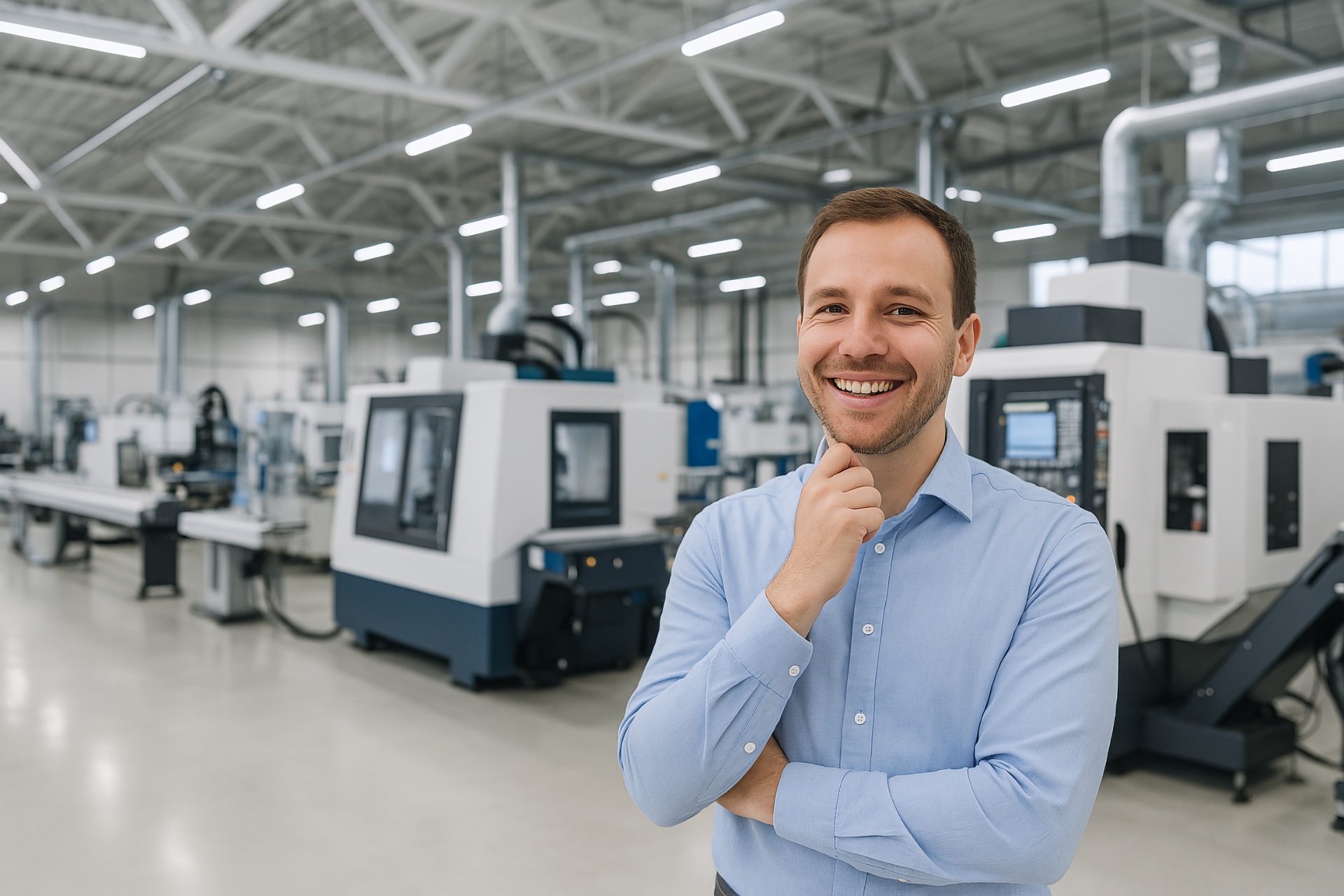
Combined grinding processes for greater process efficiency. Experience the latest technologies at GrindingHub

Veröffentlichte die 14/01/2026
Combined grinding processes for greater process efficiency. Experience the latest technologies at GrindingHub

Frankfurt am Main, January, 2026 – GrindingHub 2026 will present the current state-of-the-art of grinding technology with a focus on topics such as hybrid machining systems and cross-process efficiency increases. How can sophisticated individual processes such as grinding or eroding be combined for even greater output and precision? When does the use of laser technology make sense? From May 05 to 08 in Stuttgart, the trade fair will showcase how users can achieve higher material removal rates, less downtime and maximum process stability with state-of-the-art processes. GrindingHub will set the technological benchmark for networked, resource-efficient and high-precision manufacturing of the next generation.

More efficiency through numerous combinations

"Today's tool manufacturers are striving for ever more efficient ways to produce their tools to customer specifications – and to do so on an automated basis", says Tobias Trautmann, Managing Director of Vollmer Werke Maschinenfabrik GmbH based in Biberach an der Riss, Germany. "We support this goal with various sharpening technologies that can not only machine ultra-hard cutting materials precisely, but also optimize manufacturing processes thanks to digital solutions and AI applications." At GrindingHub 2026, the Vollmer Group will be showcasing its portfolio of grinding, eroding and laser machines that allow customers to machine ultra-hard cutting materials such as carbide, PCD (polycrystalline diamond), CVD (chemical vapor deposition) diamond or PcBN (polycrystalline cubic boron nitride). When it comes to efficiency, hybrid machines are of particular interest for sharpening tools faster and with higher quality. One example of these are full-head PCD tools with complex geometries: The contours in the carbide can be ground and the cutting edges in the PCD head can also be eroded in a single clamping operation. This procedure not only shortens both productive and non-productive time, but also makes the transition between the PCD head and the carbide blank virtually seamless – without any unevenness or graduation.

Grinding machines are used by tool manufacturers to sharpen all cutting edges made of carbide or PcBN with diamond wheels. However, if tools cannot be ground or can only be ground to a limited extent, eroding or laser machines are used. Lasers have the advantage that – in contrast to erosion – they can also be used on non-conductive materials. The wear that happens on grinding wheels does not take place on these systems because the cutting edges are machined without contact during eroding and lasering. The tool machining also takes place without significant thermal influence.

Regardless of the sharpening technology in question, Vollmer's philosophy is that its machines are always suitable for automated tool machining in 24/7 shifts. Central robot systems control loading trolleys, pallet loaders or chain magazines and monitor the fully automatic complete machining process. Digital solutions in particular are currently being used to increase efficiency in automation, which is why Vollmer equips its machines with IoT gateways as standard in order to network them with their digital environments. Data from different machines is recorded, processed and managed via a central IT platform. Supported by AI-based algorithms, a chatbot provides information on documentation or historical data to answer queries about machine utilization, the number of tools produced or missing parts. "To make our machines even more efficient, we collaborate intensively with customers, industry partners and research institutes," emphasizes Ralf Grosshauser, Managing Director of the Vollmer Group. "We collaborate with Furtwangen University on grinding technologies and belong to a network of around 30 companies that exchange knowledge and help each other stimulate future innovations."

Productivity increases of up to 70 percent

Studer's WireDress technology is an example of intelligently combined hybrid technologies in the field of grinding technology. It is integrated into high-precision CNC grinding machines for external cylindrical grinding and now also for internal cylindrical grinding. The full integration of electro-erosive dressing technology eliminates the need to manually dismantle and reset the grinding wheel for the dressing process. Christoph Plüss, CTO of United Machining Solutions Management AG, based in Bern, Switzerland, describes the electrical erosion process as follows, "In the WireDress process, metal-bonded diamond or CBN grinding wheels are dressed, profiled and sharpened in the machine using a wire. The dressing process can be carried out at the full working speed of the grinding wheel. This massively reduces non-productive time. Especially when grinding high-alloy, hardened steels, carbides and ceramics, where metal-bonded grinding wheels are used, WireDress offers enormous advantages and provides productivity increases of up to 70 percent for certain materials when this technology is used." The newly founded United Machining Solutions Group has now expanded its portfolio to include 15 brands in 2025 (including Studer). The group is one of the largest machine tool manufacturers in the world with a total turnover of over 1.5 billion US dollars and, as usual, will be represented at GrindingHub and ready to engage in face-to-face discussions with its team of specialists. ">After hardening, internal gears can be machined using various processes – depending on the required quality level – such as honing, profile grinding, generating grinding, hard skiving or hard broaching. Each process has specific strengths and limitations: Hard skiving is highly cost-effective, but reaches its limits when very high precision is required. Profile grinding offers maximum precision, but is slow and cost-intensive – and therefore only has limited appeal for high-volume production, for example in the e-mobility or commercial vehicle sectors.

Liebherr-Verzahntechnik GmbH from Kempten has closed precisely this gap with SkiveFinishing. The process combines the kinematics of power skiving with a dressing-free, electroplated tool and thus enables a significantly higher quality than hard skiving – with shorter process times and lower costs than profile grinding. This combines the best of both worlds: Excellent precision and economically robust process control. "SkiveFinishing combines the flexibility of skiving with the advantages of CBN hard finishing," explains Haider Arroum, Division and Site Manager Tools. "Optimal roughness values and economical processes can be achieved through the targeted selection of CBN grain sizes."

Significant efficiency gains are now also achieved with twist-free generating grinding. With the further development of this process, Liebherr-Verzahntechnik is raising both the economic efficiency and the quality of hard finishing to a new level. The machining times when using dressable grinding worms have been reduced almost to the level of conventional processes – even with asymmetrical gears. At the same time, optimized shift methods allow the integration of fine grinding or polishing in a single operation. The technology is suitable for a wide range of applications: From transmission components for e-mobility to special and heavy-duty transmissions. "In combination with the high rigidity of our machines – which our customers repeatedly praise – we offer measurable added value in terms of efficiency and precision and therefore a clear competitive advantage," emphasizes Fabian Stadelmann, Technology Development Manager. ">Hybrid technologies are among the major levers that can allow a company to position itself at the forefront of the technology and also boost profitability. The innovations described here impressively demonstrate where the future of grinding technology lies. Combined with other megatrends such as automation and artificial intelligence, this opens up countless opportunities to stay ahead of the global competition. As a roadmap towards future innovations, the third edition of GrindingHub will offer unique opportunities in this regard.

Weitere Informationen: Grinding Hub
Combined grinding processes for greater process efficiency. Experience the latest technologies at GrindingHub

Weitere Artikel, die Sie interessieren könnten

Ucimu: orders index in the third quarter of 2026 rise (+10.5%) foreign orders (+24.7%); domestic ord

In the third quarter of 2026, the machine tool orders index compiled by the UCIMU-SISTEMI PER PRODURRE Study & Business Culture Centre recorded a 10.5% increase compared to the July-September 2025 period . In absolute value, the index stood at 58.9 (base 100 in 2021). In particular, orders collected across borders grew by +24.7% compared to the third quarter of 2025, for an absolute value of 108.6. Order intake in Italy, however, decreased by 7.1% compared to the same period of the previous year. The absolute value of the index stood at 14.3. Riccardo Rosa , President of UCIMU-SISTEMI PER PRODURRE, stated: " Domestic demand remains weak despite the numerous ongoing negotiations. The uncertainty of the international context and the increase in energy costs are clearly impacting the activity of Italian manufacturing operators, who are postponing investments pending greater clarity. We are therefore confident ," added President Riccardo Rosa , " that Italian demand will be able to regain momentum, also supported by the hyper-depreciation measure which, in version 5.0, allows for better planning of investments, which can be spread out until September 2028. " Italian manufacturers' activity on foreign markets, however, has been decidedly dynamic. In addition to the United States, where demand remains particularly strong, Germany is also beginning to show signs of recovery: certainly good news for the Italian industry in the sector. According to data processed by the UCIMU-SISTEMI PER PRODURRE Study & Business Culture Centre, in the first half of 2026 (latest available data), the main outlet markets for Italian supply in the sector were the United States (329 million euros +12.6%) and Germany (137 million euros, +7.6%), followed by France, Poland, and Spain. “In particular, the aerospace and defense sectors, as well as the energy sector, are driving orders, regardless of the country of reference,” concluded Riccardo Rosa . These are the latest sector data presented by the president of UCIMU-SISTEMI PER PRODURRE, Riccardo Rosa , on the occasion of the inauguration of 35.BI-MU, the international sector event taking place at fieramilano Rho from 12 to 16 October . Speakers at the meeting chaired by Rosa included Valentino Valentini , Deputy Minister of the Ministry of Enterprise and Made in Italy; Giovanni Bozzetti, President of Fondazione Fiera Milano; Simona Greco , Hosted Exhibitions Director of Fiera Milano; and Luca Durante , Head of the Capital Goods Office at ICE-Agenzia. The second part of the event featured an interview with Gian Piero Cutillo, Co-General Manager of Leonardo, and Roberto Vavassori , Executive Director of Brembo and President of ANFIA, conducted by Paolo Bricco, Special Correspondent, Il Sole 24 Ore. The event features over 400 companies , spread across a total area of ​​40,000 square meters in pavilions 22 and 24. The spotlight will be on machine tools, robotics, automation, additive manufacturing, digital manufacturing, artificial intelligence, measurement and quality control systems, components, and enabling technologies for the smart factory. The event, promoted by UCIMU-SISTEMI PER PRODURRE and organized by EFIM-ENTE FIERE ITALIANE MACCHINE, significantly enhances the thematic cultural dimension. Over 50 events are planned , including conferences, workshops, and round tables. New features this year include two special forums dedicated to the Aerospace & Defense and Energy sectors, strategic sectors that will be analyzed through the direct testimony of production and operations directors of some of the main international players and the CEOs of several Italian SMEs. In terms of training, the VLF4EU (Virtual Learning Factory for EU) International Conference is particularly relevant, focusing on an innovative training system based on the Digital Twin of the factory. The conference will feature around thirty researchers from Denmark, France, Slovenia, Spain, Sweden, and Italy. The relationship between young people and the world of work will be explored in depth at the meeting " Value, Future, Impact. Work According to the New Generation ," organized by ANIPLA with the patronage of the UCIMU Foundation. These conferences are part of the Skills Area 's calendar of meetings. Located in Pavilion 24, the Skills Area will host initiatives promoted by UCIMU Academy and the UCIMU Foundation . Among these, ROBOTGAMES , the automation and robotics competition for secondary school students, now in its second edition, will once again be held.

13/10/2026 Mehr lesen

Mechanical exports exceed 20 billion euros in the first half of the year

The figures presented at Anima Export Days 2026: +2.8% compared to the same period last year. Exports are growing in the USA, China, and Germany. Exports of the mechanical engineering sector represented by Anima Confindustria reached €20.4 billion in the first half of 2026, up 2.8% compared to the same period in 2025. The data, processed by Anima's Statistics Office based on Istat data, were presented during the Brescia leg of Anima Export Days , the initiative dedicated to the internationalization of the Italian mechanical engineering sector. Running from September 28th to October 1st, the event is bringing together companies in the sector with selected international buyers. Now in its sixth edition, the Export Days are a collaboration between Anima Confindustria, the Ministry of Foreign Affairs and International Cooperation (MAECI), and the Italian Trade Agency (ITA), with the aim of fostering new trade relations and supporting the strengthening of Italian companies' presence in foreign markets . This year, the B2B meetings involve operators from over 20 countries and are taking place in four locations : Borgosesia, Turin, Brescia, and Bassano del Grappa. The initiative comes at a time when geopolitical tensions and uncertainties over trade policies continue to impact international trade. Against this backdrop, data for the first half of 2026 paint a resilient picture for the mechanical engineering sector, represented by Anima. Exports from Anima's sectors totaled €20.4 billion , up 2.8% from €19.8 billion in the same period in 2025. The trend confirms the sector's strong international vocation , albeit with varying trends. The main export components include valves and faucets , gas turbines, hydraulic pumps, and air conditioning systems. Other sectors are showing positive results, while others are experiencing a decline. Geographically, the United States remains the leading destination market for exports in the animal and animal sectors, with €2.38 billion in the first six months of 2026, up 2.4% compared to the same period of the previous year. Germany follows, with €1.99 billion (+4.8%), and France, with €1.81 billion (+2.9%). Alongside the more established European markets, some particularly significant trends are emerging in non-EU areas, starting with China, the Middle East, and North Africa. Despite a general decline towards the Gulf countries (-3.7%), exports to Saudi Arabia grew by 14.6% (665.1 million euros) , supported by the sectors related to process plants, energy, infrastructure and cooling. In China , exports of the Anima sectors grew by 22.3% and reached almost 720 million euros . The aeraulic systems sector was the main driver of this increase. Steam turbines and air compressors also recorded good growth in China. Algeria's growth was even more significant, rising 146.7% from €173.3 million to €427.6 million. This result was primarily driven by technologies such as gas turbines (which account for approximately 47% of total exports to the country), valves and taps, as well as pressure products and equipment. These flows are often tied to individual orders and therefore not necessarily characterized by continuous trends, but the data highlights the ability of Italian companies to seize opportunities even in rapidly developing markets. "The 2.8% growth in exports in the first half of the year confirms the ability of Italian mechanical engineering to maintain a competitive position on international markets, even in a period characterized by geopolitical tensions and trade uncertainty. The United States remains the primary destination market, while the results in China and Algeria demonstrate the ability of companies to seize opportunities in different markets. This is a sign of resilience that must be accompanied by greater diversification and a strengthened international presence. In this regard, the Export Days represent a concrete tool for creating new relationships and business opportunities," stated Pietro Almici, president of Anima Confindustria . On the import front, in the first six months of the year, the Anima sectors recorded a 1.2% increase, for a total value of 9.73 billion euros; this figure completes the current trade picture and confirms the centrality now assumed by international markets beyond the European one. It is in this context that Anima is renewing its Export Days , transforming market analysis into a concrete opportunity for supply and demand to meet.

05/10/2026 Mehr lesen

Steel exports: the top ten hubs are worth €6.9 billion.

In the first half of 2026, exports from the main steel districts grew by 1.9%. Imports decreased by 9.2%. The Italian steel industry is holding up on foreign markets, but at very different rates across regions. In the first half of 2026, exports in value of steel products, pipes and other products from the first transformation of steel from the top ten Italian steel hubs reached almost 6.9 billion euros , compared to 6.7 billion in the same period of 2025, marking a growth of 1.9% . The data for the top ten hubs is more dynamic than the overall export trend: overall, they fell by 0.1% in value in the half-year, compared to a 0.2% increase in volume . This slight decrease, explains the siderweb Research Office, is due to lower sales prices. The rankings confirm Brescia at the top. Udine maintains second place, and Cremona third. However, the rankings show significant changes: Milan gains two spots, Reggio Emilia gains one, while Bergamo loses two and Lecco loses one . Brescia strengthens its leadership. Milan climbs. The Brescia hub remains Italy's leading steel hub in terms of export value, recording growth of 7.1% . This increase allows Brescia to widen its lead over Udine: the gap between the top two hubs increases from 74.7 to 96.5 million euros . Udine maintains second place with a 5.3% increase in exports. However, Cremona recorded the strongest growth among the top ten hubs, consolidating its third place: +12.6%. Mantua , fourth in the ranking, saw a 5.8% drop in exports. Milan saw significant growth, rising two places with a 4.5% increase. Vicenza retained its sixth position, with export values ​​essentially unchanged compared to the first half of 2025. The most negative figure in the ranking is that of Bergamo , which recorded a 19.5% contraction in exports and dropped two positions. On the other hand, Reggio Emilia recorded one of the most significant increases, with an 11.1% increase, and rose one position. Terni grew by 7.8% and maintained its eighth place. Lecco rounded out the top 10, with exports down 3%. Taranto , home to the Acciaierie d'Italia steelmaking hub, is also outside the top 20 in the first half of 2026. Exports fell by 86.5%. In 2025, the value had fallen by 40.3% compared to the previous year, stopping at 42 million euros (362 million in 2022). Imports: €500 million less from the top ten hubs The picture is changing for foreign purchases. In the first half of 2026, imports from the top ten steel hubs decreased by 9.2%, from 5.8 to 5.3 billion euros : approximately 500 million euros less in a year. At the national level, the contraction is even more marked: imports of steel products, pipes, and other products from the first steel transformation decreased by 13% in value and 15.9% in quantity. The different dynamics between European and non-EU suppliers is particularly significant. Imports from non-EU countries decreased by 22.5%, equal to approximately 1.6 million tonnes, while those from EU countries decreased by 2.1%. In the context outlined by the analysis by the siderweb Research Office, the reduction in non-EU purchases is also linked to the full implementation of the Carbon Border Adjustment Mechanism (CBAM) .

02/10/2026 Mehr lesen
Abonnieren Sie unseren Newsletter
Um über die neuesten Nachrichten der Industriewelt auf dem Laufenden zu bleiben
Kontaktieren Sie uns
Image Newsletter Lindustriale
Dati Legali

L'industriale s.r.l.
P. IVA: 12212870153
Codice Fiscale: 12212870153

Sede Legale

Via Carlo Dolci, 32
20148 Milano (MI)
Italy

Registro Imprese

Iscrizione R.I.: 12212870153
REA: MI-1539011
Capitale sociale: Euro 10.400,00 i.v.

Top
This website is protected by reCAPTCHA, therefore the Google privacy policy and terms of service apply.